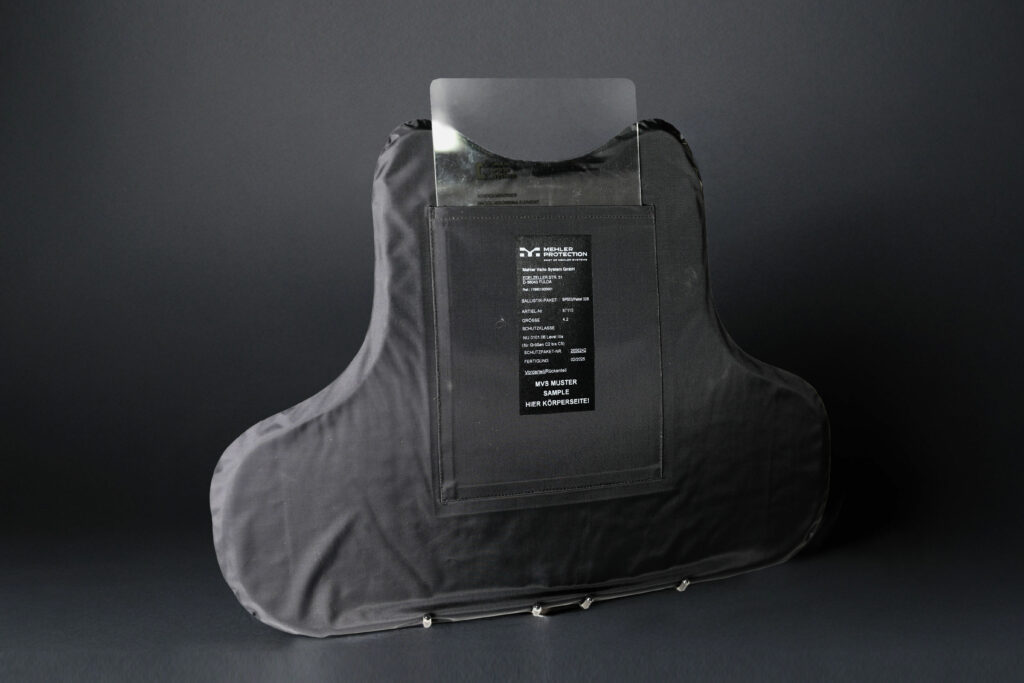
Blog
4 Mar 2026
How to wear Body Armour
Body armour only provides its intended level of protection when it is worn correctly. Even the most advanced ballistic package or plate carrier cannot compensate for incorrect positioning, an unsuitable size or poor adjustment of the system.
This blog post outlines the key principles: how different armour systems should fit, which typical mistakes need to be avoided and which criteria are relevant when selecting and adjusting vests, plate carriers and covert solutions.
Why correct fit matters
The protective performance of ballistic body armour is directly linked to its fit. Protection surface, geometry and freedom of movement must interact in such a way that:
- Vital organs remain covered in realistic postures and movements
- Running, climbing, sitting and operating equipment are still possible
- The system remains stable under load and during dynamic tasks
Modern protection systems – including waistcoats, plate carriers and covert vests – are modular platforms. They combine ballistic protection, load‑bearing equipment and, in many cases, communication components. Correct sizing and adjustment are therefore crucial: the system must fit the individual wearer, stay in place and support the operational task rather than hinder it.
A fundamental rule applies: hard objects such as zips, ID tags, key fobs, radios, pens or tools should not be worn directly underneath the ballistic package. On impact, acceleration forces can turn these items into secondary projectiles and cause additional injuries.
If the system does not fit properly, several risks arise:
- Plates sit too high, too low or off to the side, and vital organs are not fully covered
- A slipping carrier restricts movement, can snag on obstacles or interfere with drawing equipment and weapons
- Pressure points and hard objects under the vest increase the risk of injury in the event of an impact or a fall
- Poor stability and comfort reduce concentration and endurance; fatigue and distraction occur more quickly
The objective is stable coverage of the relevant protection zones, combined with maximum possible mobility and comfort for the specific deployment profile.
Waistcoats: Everyday protection for police and security
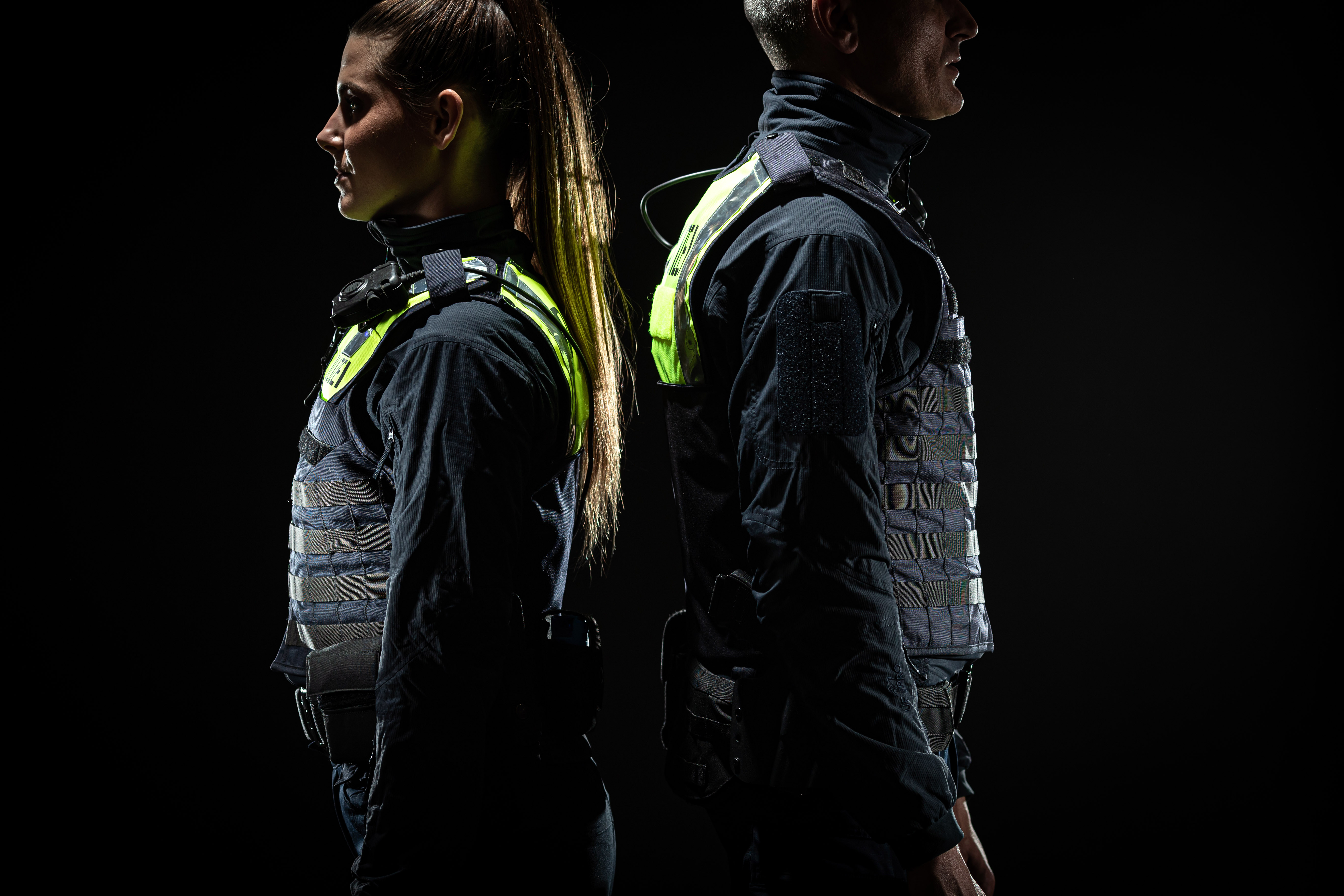
Waistcoats are widely used in everyday police duties, security services and visible or semi‑covert deployments. They typically provide soft ballistic protection, high wearing comfort and can be extended with additional modules.
Characteristics of a properly fitting Waistcoat
- Central closure and close fit: The waistcoat is closed centrally and lies close to the torso. The fit is snug without restricting breathing or normal upper‑body movement.
- Correct protection area at the front: The protective surface extends from the collarbone down to just above the navel. In this zone, the heart, lungs and major blood vessels are located and therefore need to be covered in standing, seated and slightly bent positions.
- Back panel position: The rear panel does not hang too low and ends above the lumbar region. In this way, the spine and upper organs are protected without the vest pushing into the pelvis area or interfering with belts and duty gear.
- Soft ballistics correctly inserted: The soft ballistic inserts are laid in smoothly and completely. Folds, trapped fabric or incorrect orientation are avoided, as they can reduce protection and create pressure points.
Many waistcoat systems can be upgraded with an additional stab‑resistant layer, for example using multi‑layer fabrics, depending on threat assessment and operational requirements.
Plate Carriers: High‑risk and tactical operations
Plate carriers are typically used in military and high‑risk law‑enforcement operations. Fitted with hard ballistic plates, they provide a higher level of protection against rifle threats and also serve as a platform for tactical equipment such as magazines, medical kits and communication devices.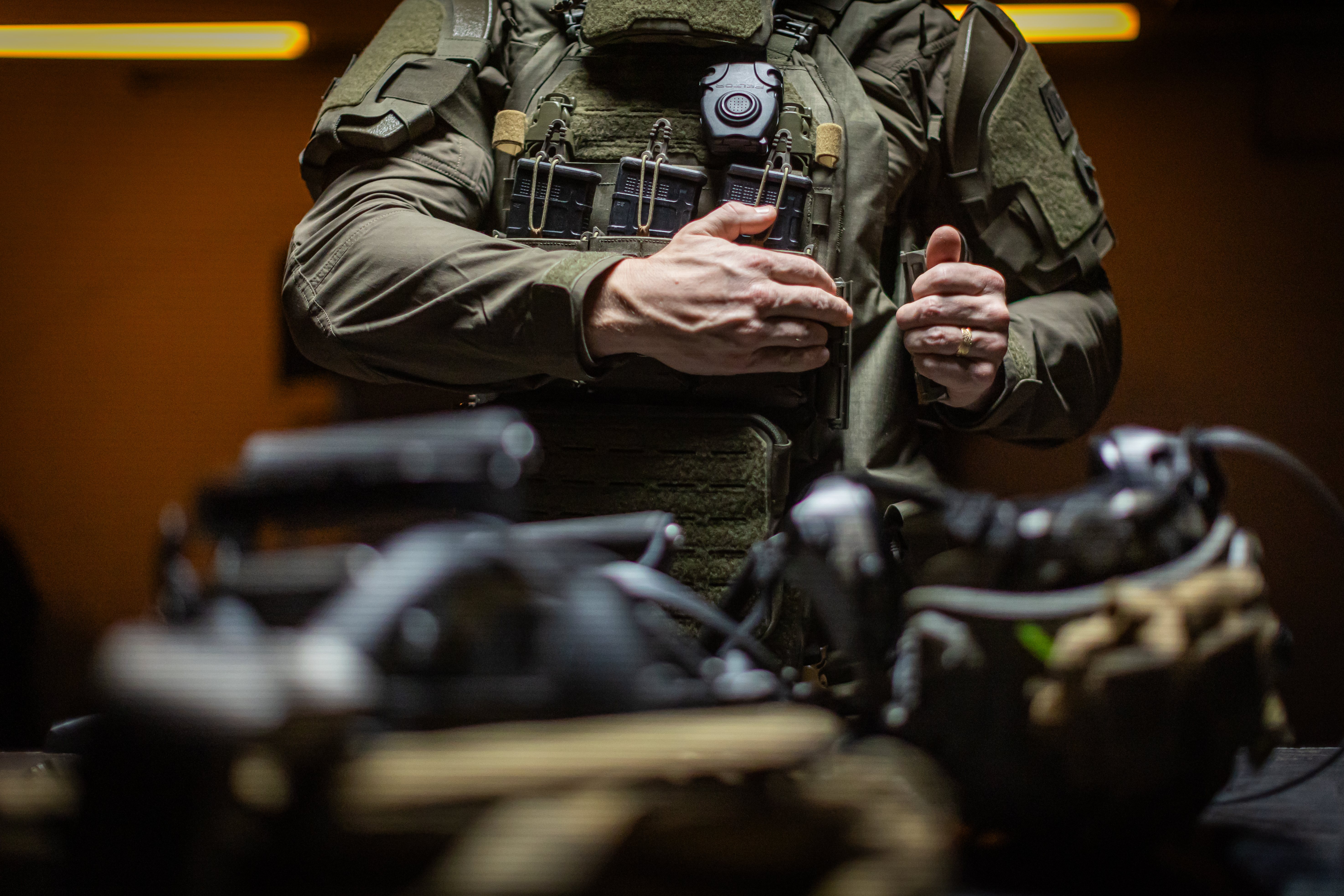
Key Parameters for Plate Carrier Fit
- Correct plate position: The top edge of the front plate sits on the upper sternum, approximately at the level of the jugular notch. This alignment ensures that the heart, lungs and central blood vessels are covered in realistic firing and movement positions.
- Plate close to the body: The plate lies close to the torso without excessive play. When bending forward, it does not move away from the body. Excessive distance can compromise coverage and increase trauma due to uncontrolled plate movement.
- Alignment of front and rear plates: Front and rear plates are positioned at the same height so that the protection areas overlap correctly. Misalignment can create unprotected zones, particularly in lateral or oblique angles of attack.
- Cummerbund tension: The cummerbund or side straps provide stability without restricting breathing. Deep inhalation and rotation of the upper body remain possible without significant pressure or pain points.
Modern plate carriers are highly adaptable thanks to modular systems such as MOLLE or laser‑cut interfaces. Equipment can be positioned so that it remains accessible while not interfering with weapon handling, communication or vehicle operation.
Covert Vests: Discreet protection close to the body
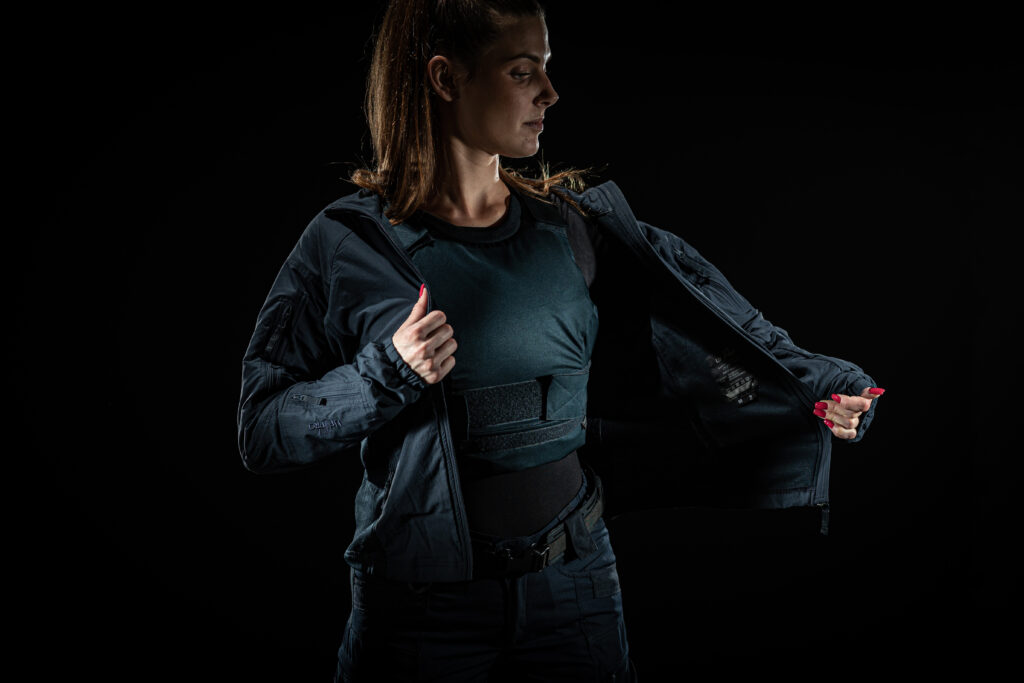
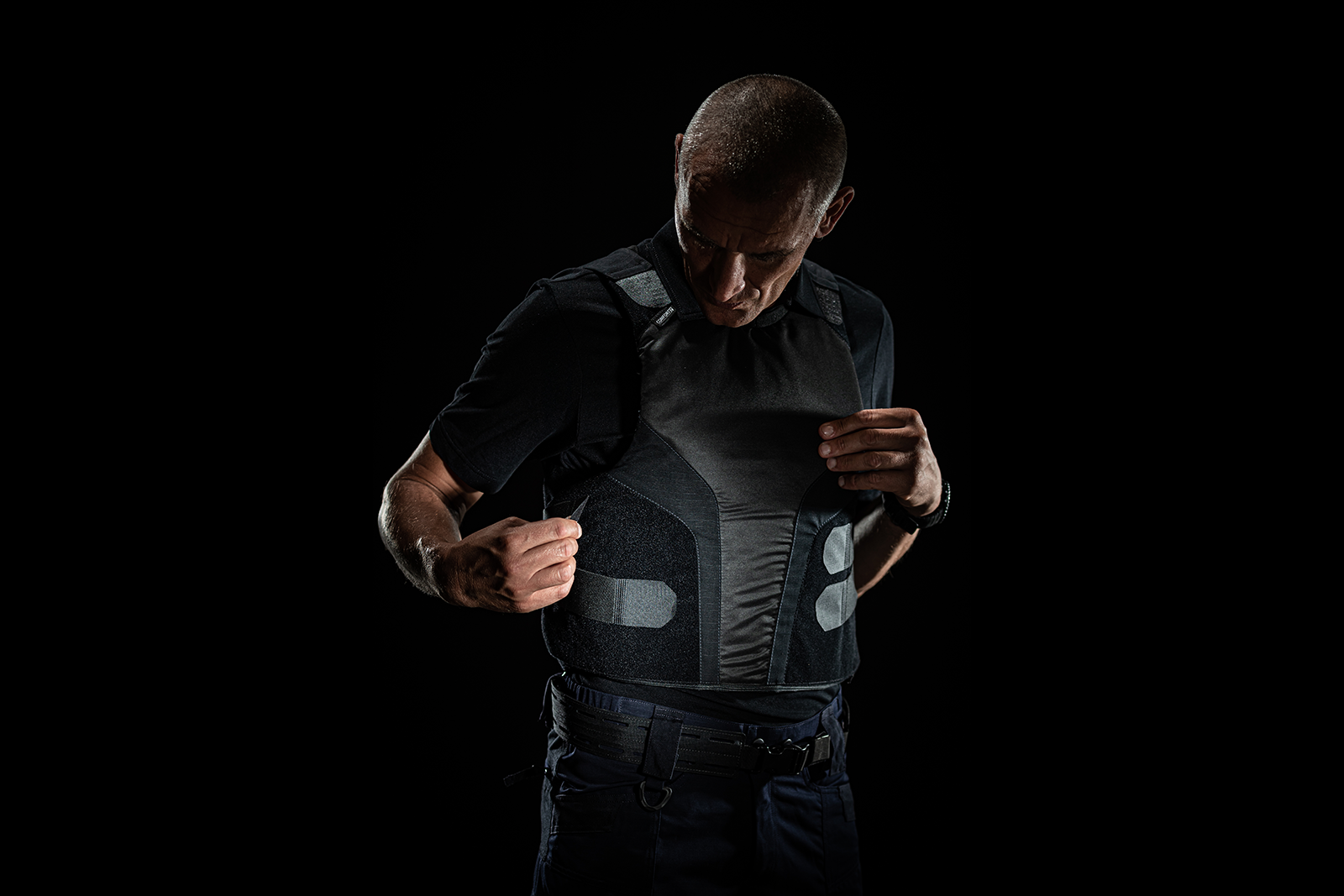
Covert vests are designed for discreet protection in concealed operations. They are light, thin and intended to be worn under clothing. Their full protective performance is achieved only with correct sizing and positioning.
Criteria for wearing a Covert Vest
- Direct contact with the body: Covert vests are worn close to the body. A single functional base layer shirt underneath is usually sufficient. Additional thick layers between body and vest can negatively affect both fit and concealment.
- Smoothly inserted soft ballistics: The soft ballistic inserts are laid in flat and without folds. Creases reduce effective protection and may lead to pressure points when seated or moving.
- Correct vertical position: The vest is not positioned too low. As with other systems, coverage of vital organs in the upper chest area remains the priority and must not be compromised for comfort or concealment.
If the threat level changes, some covert vest models allow for an upgrade, for example by attaching a hard ballistic plate in a suitable cover using hook‑and‑loop. This enables adaptation of the system to different deployment profiles while maintaining a discreet appearance where required.
Selecting the right system: Matching protection to the mission
For body armour to provide effective protection, deployment profile, protection level and fit must align precisely.
Relevant questions include:
- Operational environment: Is the deployment covert, uniformed police or overt military? Visibility, public perception and typical movement patterns differ and influence system selection.
- Required protection level: Is certified soft ballistic protection sufficient for the expected threats, or is a higher level of rifle protection required by adding hard ballistic plates?
- Size and geometry of panels and carriers: Are the dimensions of the ballistic inserts and the textile carrier appropriate for the wearer’s body shape and size? The system must not slip, yet movement required for running, climbing, driving or weapon handling must remain possible.
- Modularity and adaptability: Does the system provide sufficient modularity for mission‑specific and personal configuration? Typical interfaces include MOLLE, hook‑and‑loop fields or laser‑cut mounting options for pouches, identifiers and accessories.
A structured sizing and fitting process – ideally including dynamic movement tests – is essential to ensure that the selected configuration performs as intended in practice.
Summary
Body armour reaches its full protective potential only when the system is correctly selected, sized and worn:
- Fit ensures stable coverage of vital organs without restricting breathing or movement
- Plates and soft ballistic panels are positioned accurately and inserted without folds
- Hard objects are not worn directly underneath the ballistic package
- The chosen system, protection level and modular configuration are aligned with the specific deployment profile
Careful selection, precise adjustment and regular fit checks contribute directly to safety, operational performance and endurance in demanding environments.
Images and graphics
Mehler Protection, Mehler Vario System GmbH (All rights reserved, 2026)