Blog
11 Dec 2025
The Evolution of Hard Ballistic Plate Cuts
Hard ballistic plates are an important component of modern body armour systems, which are becoming increasingly important. They are designed to protect against rifle ammunition and are available in various forms, each of which meets different requirements: maximum protection area or maximum mobility.
But how did these shapes come about? And why is it that the shooter’s cut and swimmer’s cut coexist with the classic SAPI standard today?
In this post, we explore the most important plate cuts, their recommended applications and the fascinating history of their development from the first steel plates through to modern high-tech designs.
Why were hard ballistic products introduced?
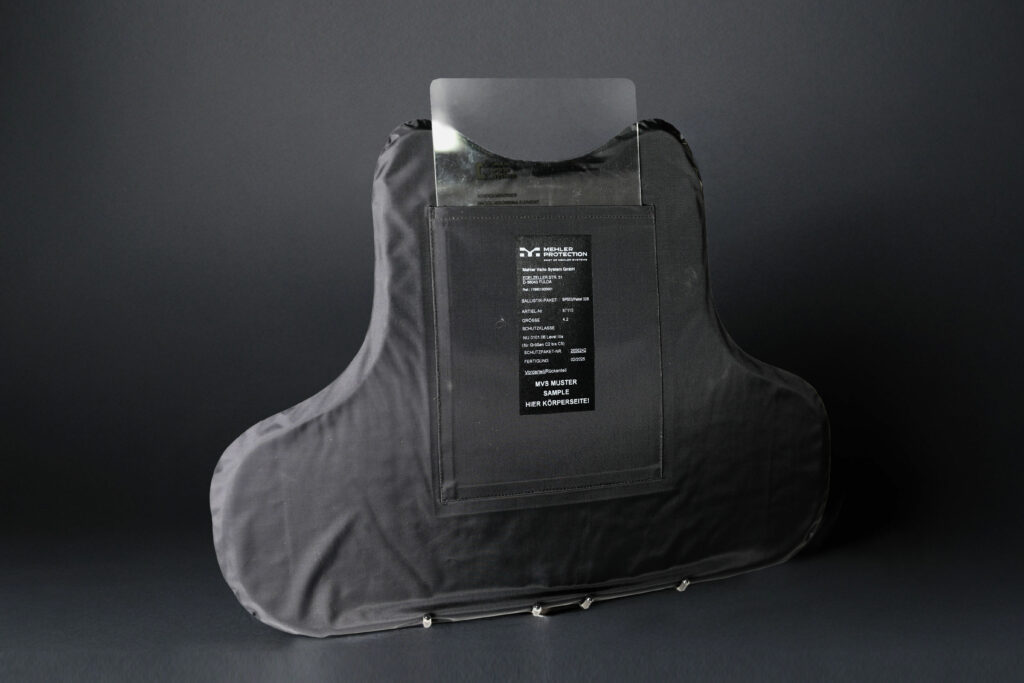
The introduction of hard ballistics was a direct response to the increasing threat posed by long gun ammunition. Soft ballistics, used as inserts in waistcoats, for example, offered protection against handguns, but little protection against rifle ammunition with high velocity and energy.
Hard ballistic plates absorb the extremely high kinetic energy of rifle projectiles and prevent them from penetrating vital organs.
Military needs: Soldiers in conflict zones – such as Vietnam and later in Iraq and Afghanistan – were increasingly being exposed to threats from assault rifles and snipers.
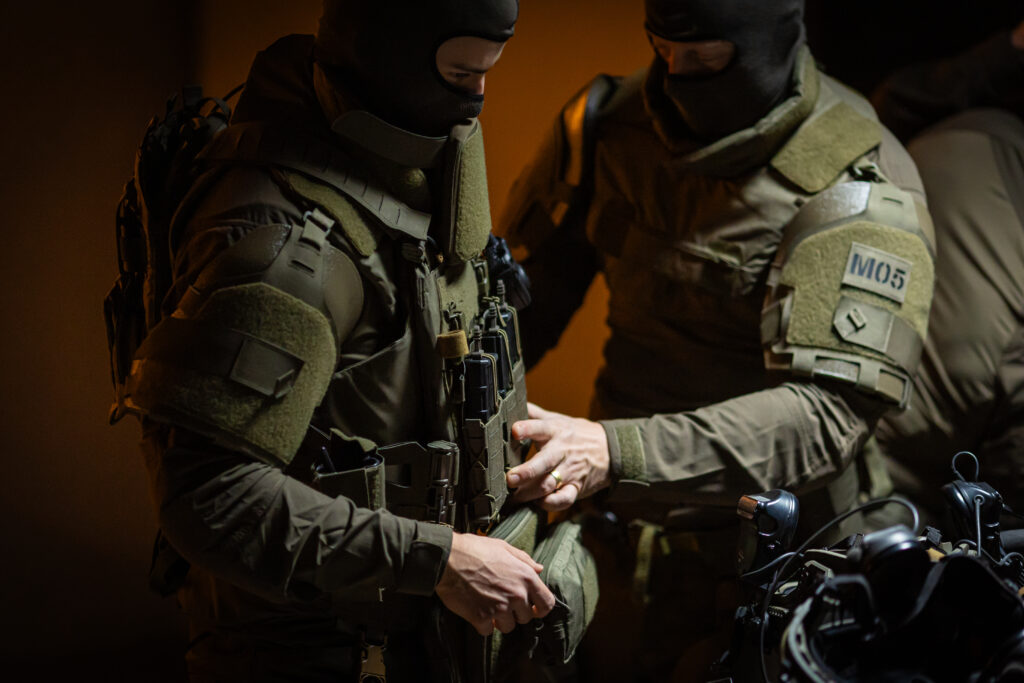
Police needs: Special forces and patrol police units needed a way to protect themselves against long arms during shootings or terrorist attacks.
How have hard ballistic plates evolved?
The way plate shapes have developed is closely tied to tactical requirements and material innovations:
Early phase (20th century):
The first protective vests consisted of steel plates that were rectangular in shape, extremely heavy, and not exactly ergonomic. Back then, protection was more important than mobility.
Breakthrough with ceramics (late 20th century):
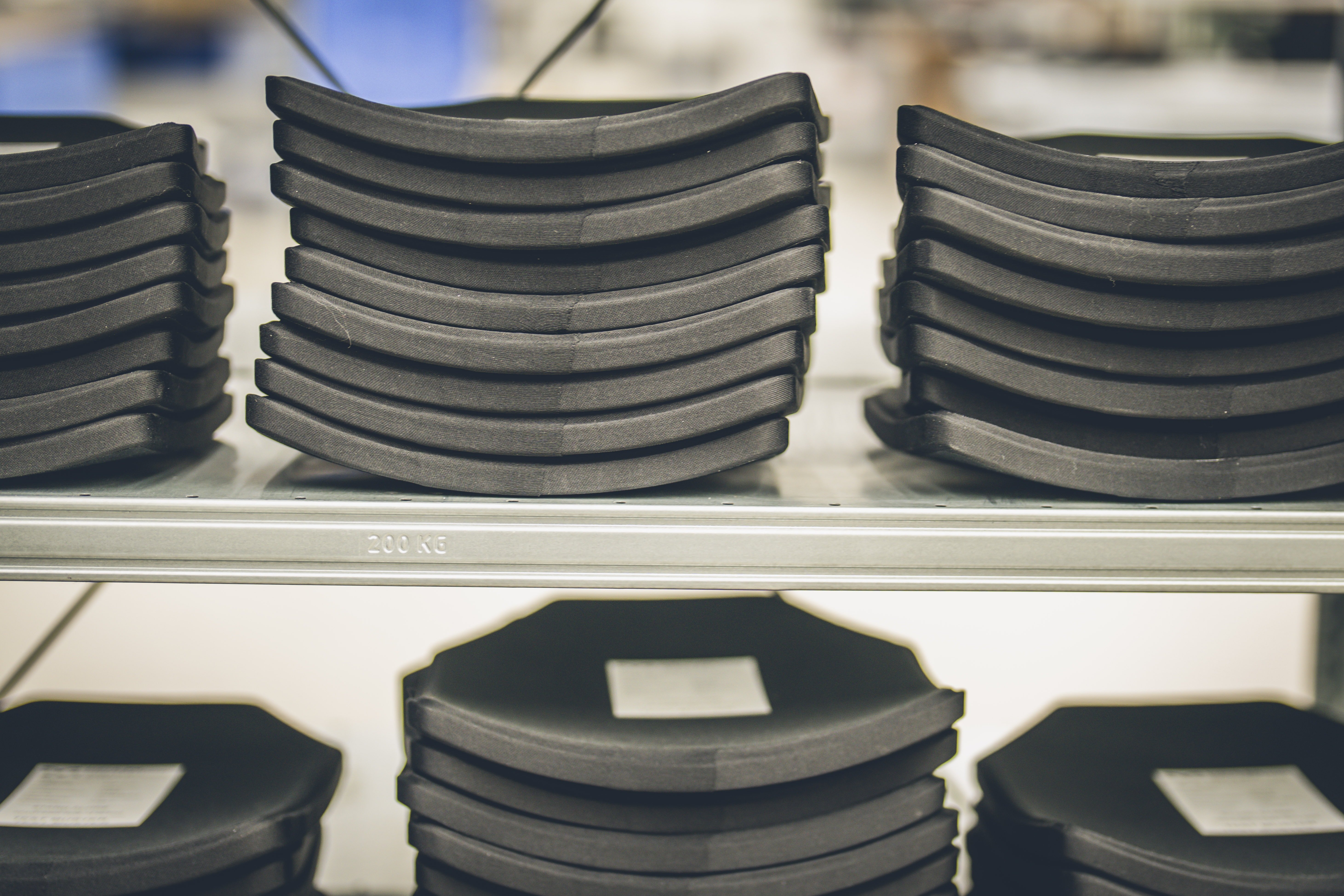
Ceramic plates made with alumina or boron carbide were introduced as a much lighter and more effective means of protection against rifle ammunition. This made ergonomic design possible for the first time.
SAPI standard (1990s):
Small arms protective inserts (SAPI) were developed for the U.S. Army to provide protection against 5.56 x 44 NATO ammunition and similar threats. SAPI plates were integrated into modular systems, setting the standard for military operations.
ESAPI and special forces (2000s):
Enhanced SAPI was introduced for higher threats (e.g. armour-piercing ammunition). At the same time, the shooter’s cut and swimmer’s cut were created for special forces that required maximum mobility during boarding, close quarters battle (CQB) scenarios and amphibious operations.
Today:
Multi-curve designs, UHMWPE (ultra-high molecular weight polyethylene) and hybrid materials make for extremely lightweight and resistant plates.
What plate types are available and what applications are they suitable for?
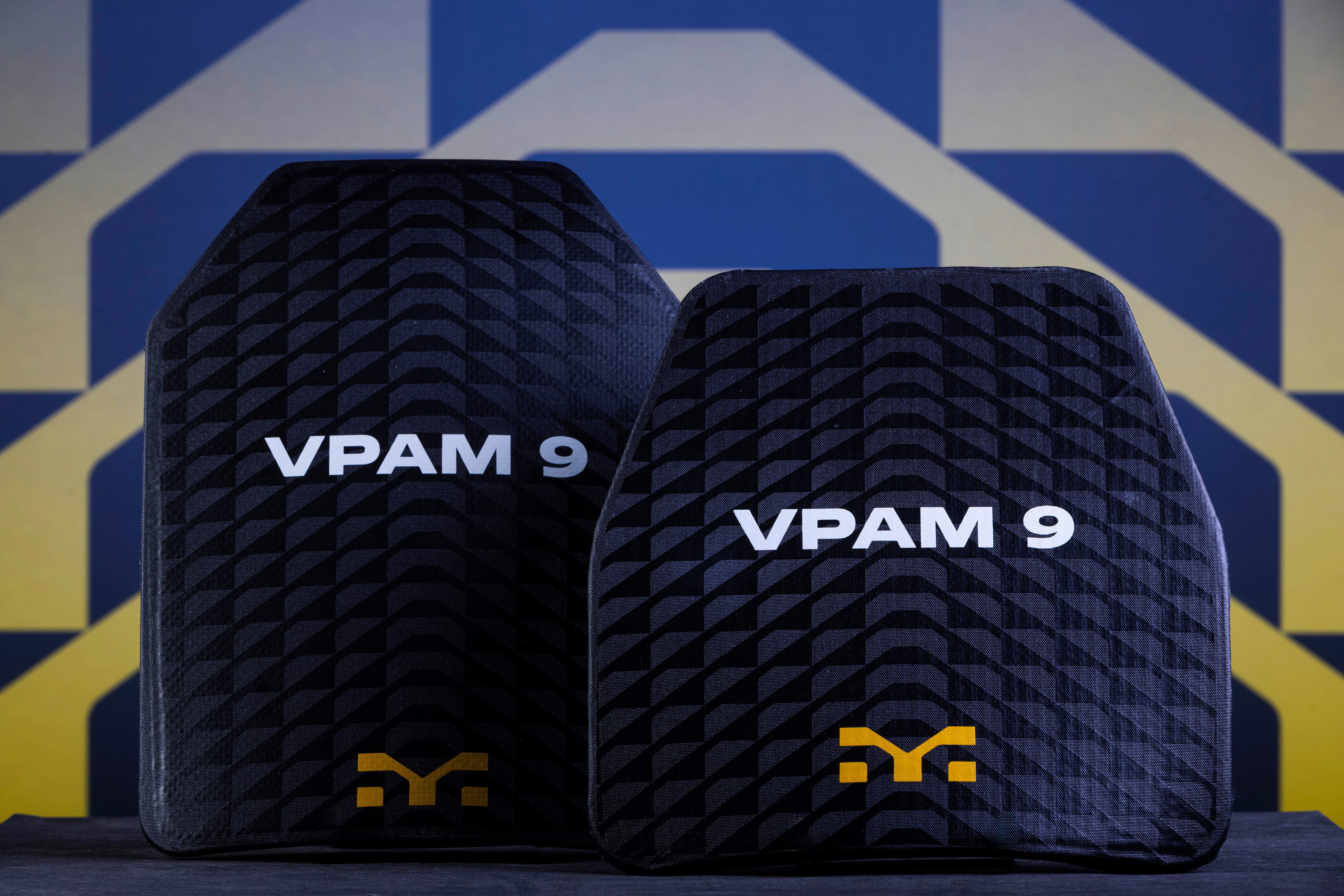
The shape of a plate, known as the ‘cut’, determines the size of the protective surface and how much mobility the user enjoys. When selecting the plate shape, the correct choice depends heavily on the mission profile, as each variant strikes a specific balance between the protective surface area and the level of mobility. Various variants are available with different advantages and disadvantages. The best-known variants are:
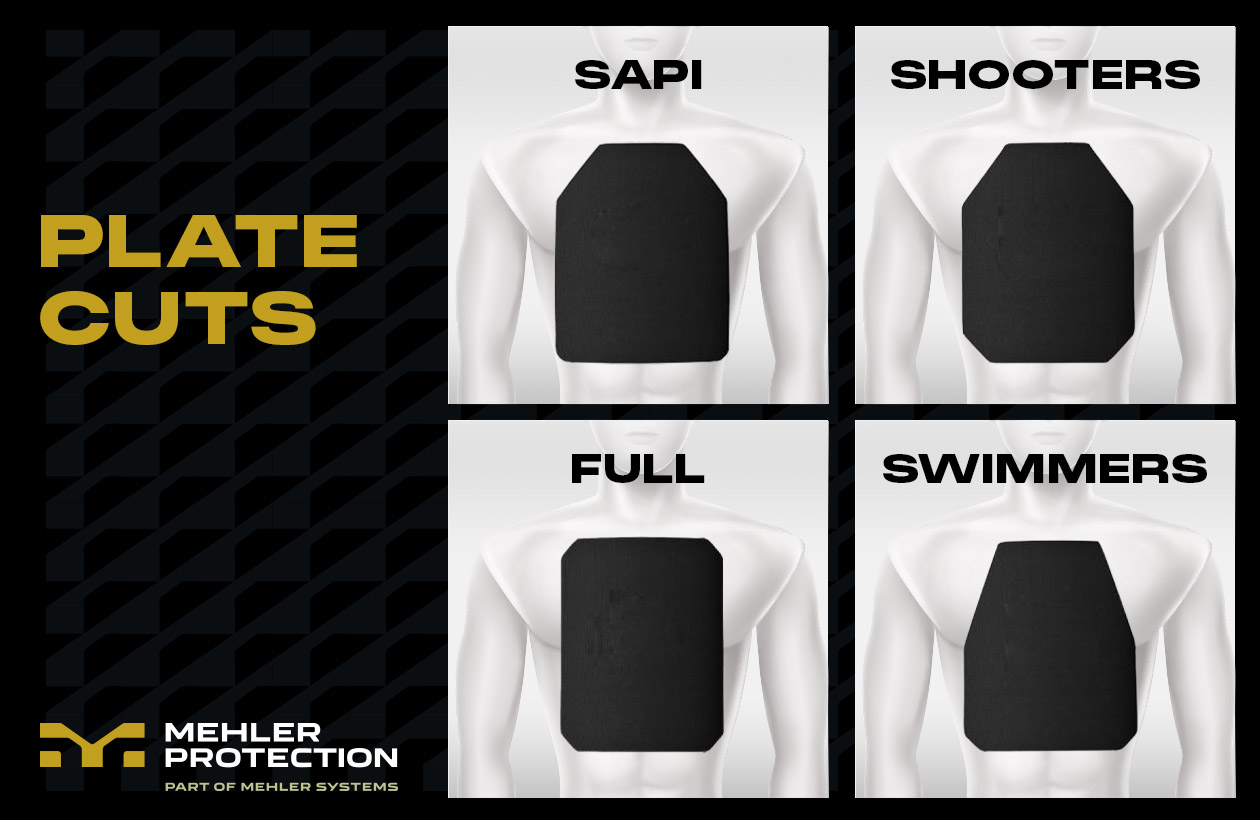
SAPI (small arms protective insert) cut
The standard variant for military operations. Rectangular with tapered top corners (approx. 45°). Developed for the U.S. armed forces in order to combine protection with an ergonomic design.
Applications: Infantry, normal military operations.
Advantage: Maximum protective surface with an acceptable level of mobility.
Disadvantage: Slightly bulky for dynamic missions.
Shooter’s cut
This shape is designed for dynamic combat. More severely tapered corners compared to the SAPI shape.
Applications: Special forces, snipers, CQB scenarios.
Advantage: Greater freedom of movement for the arms and better weapon handling.
Disadvantage: Smaller protective surface than SAPI.
Swimmer’s cut
Aggressively cut shape for extreme mobility.
Applications: Maritime operations, recon, special forces with a need for extreme mobility.
Advantage: Maximum shoulder freedom for swimming, climbing and boarding.
Disadvantage: Significantly smaller protective surface area.
Full cut
Rectangular plate without any cutaways.
Applications: Typically used for back plates or static positions.
Advantage: Largest possible protective surface area.
Disadvantage: Very limited mobility, unsuitable for dynamic missions.
Summary
Hard ballistic plates are an indispensable means of protection against rifle ammunition. The history of their development – from heavy steel plates to lightweight ceramic and polyethylene solutions – demonstrates the extent to which materials technology and tactical requirements have, quite literally, shaped body armour. The correct choice of cut – SAPI, shooter’s or swimmer’s – depends on the mission profile, i.e. striking the right balance between protection and mobility.
Further information on this topic is available at:
- https://mehler-protection.com/blog/ballistic-protection-protective-elements-and-standards/
- https://mehler-protection.com/blog/aramid-uhmwpe-ceramics-the-key-elements-of-high-performance-body-protection-solutions/
- https://mehler-protection.com/blog/how-body-armour-has-evolved-from-aramid-to-advanced-ceramic-plates//
Images and graphics
- Mehler Protection, Mehler Vario System GmbH (all rights reserved, 2025)