Blog
12 Feb 2026
Threats posed by UAVs to military land vehicles
Unmanned aerial vehicles (UAVs), better known as drones, have become a central factor in modern warfare in recent years. They are not only a means of reconnaissance, but are increasingly being used directly to combat targets – and thus also pose a growing threat to armoured land vehicles. From small, manoeuvrable FPV (first-person view) drones to medium-range tactical drones and loitering munitions, the variety of platforms, control types and weaponry options is forcing the military to fundamentally rethink its protection concepts.
In this blog post:
- Drones as game changers in ground warfare
- Types of drones: classification and military relevance
- Types of control and guidance for UAVs
- Armament of drones – warheads and modes of action
- Countermeasures – soft kill and hard kill in detail
- Sensor fusion, AI and remote weapon stations
- Integration into vehicle protection systems
- Summary
Drones as game changers in ground warfare
Over the past two decades, Unmanned Aerial Vehicles (UAVs) have evolved from specialised reconnaissance platforms to become one of the most influential weapons in modern warfare. While early military drone systems were primarily used for strategic reconnaissance and precision air strikes, the war in Ukraine in particular has demonstrated a new quality of UAV use:
Drones are now available in large numbers, are relatively inexpensive, can be quickly adapted and are present at almost all tactical levels – from small infantry units to operational command structures.
A decisive change is that UAVs no longer function solely as sensors, but are themselves used as direct effectors. FPV kamikaze drones, loitering munitions, improvised drop systems and increasingly semi-autonomous platforms enable even small units to carry out targeted attacks on armoured vehicles, logistical hubs and command elements. Particularly critical is the ability to engage vehicles from a vertical perspective – where armour is often weaker in design and sensitive components are located.
For military land vehicles, this development represents a fundamental change in the threat situation. Traditional protection concepts, which are primarily designed to counter kinetic threats such as anti-tank weapons, artillery fragments or mines, are no longer sufficient to reliably defend against the multitude of small, fast and often difficult-to-detect UAVs. Protection, reconnaissance, command and control, and effect must now be more closely integrated and dynamically adapted.
Types of drones: classification and military relevance
UAVs can be divided into several categories according to size, range, payload and mission profile, each of which poses different threat potentials for military land vehicles.
Small drones and micro-UAVs
Small drones and micro UAVs are often based on commercial multicopter platforms and weigh only a few kilograms. Their low visual, acoustic and radar signature makes them particularly difficult to detect. Originally designed for reconnaissance and observation, they are now increasingly being used as carriers of small payloads or drop off munitions. Especially in urban or wooded areas, they can fly surprisingly close to vehicles and attack sensitive components.
Tactical drones
Medium-range tactical drones have significantly greater ranges and longer flight times. They carry stabilised electro-optical sensors and enable continuous observation of the battlefield. Their main contribution lies in target reconnaissance, target assignment and fire control for other weapons. Even though they themselves are only limitedly armed, they indirectly increase the threat to land vehicles through improved reconnaissance and coordination of enemy forces.
FPV drones
FPV drones currently pose one of the most immediate threats to armoured vehicles. The pilot controls the drone from the perspective of an on-board camera, enabling them to perform very precise flight manoeuvres. These drones are fast, inexpensive and can be deployed in large numbers. Their ability to fly directly at vulnerable targets such as open hatches, sensors, weapon stations or roof armour is particularly dangerous.
Loitering munitions
Loitering munitions combine the characteristics of a drone with those of precision munitions. These systems can circle over an area, identify targets independently or through operators, and then carry out targeted attacks. They have longer ranges and more powerful warheads than improvised systems and are manufactured industrially. Their use significantly changes the dynamics of combat, as they create a permanent threat above the battlefield.
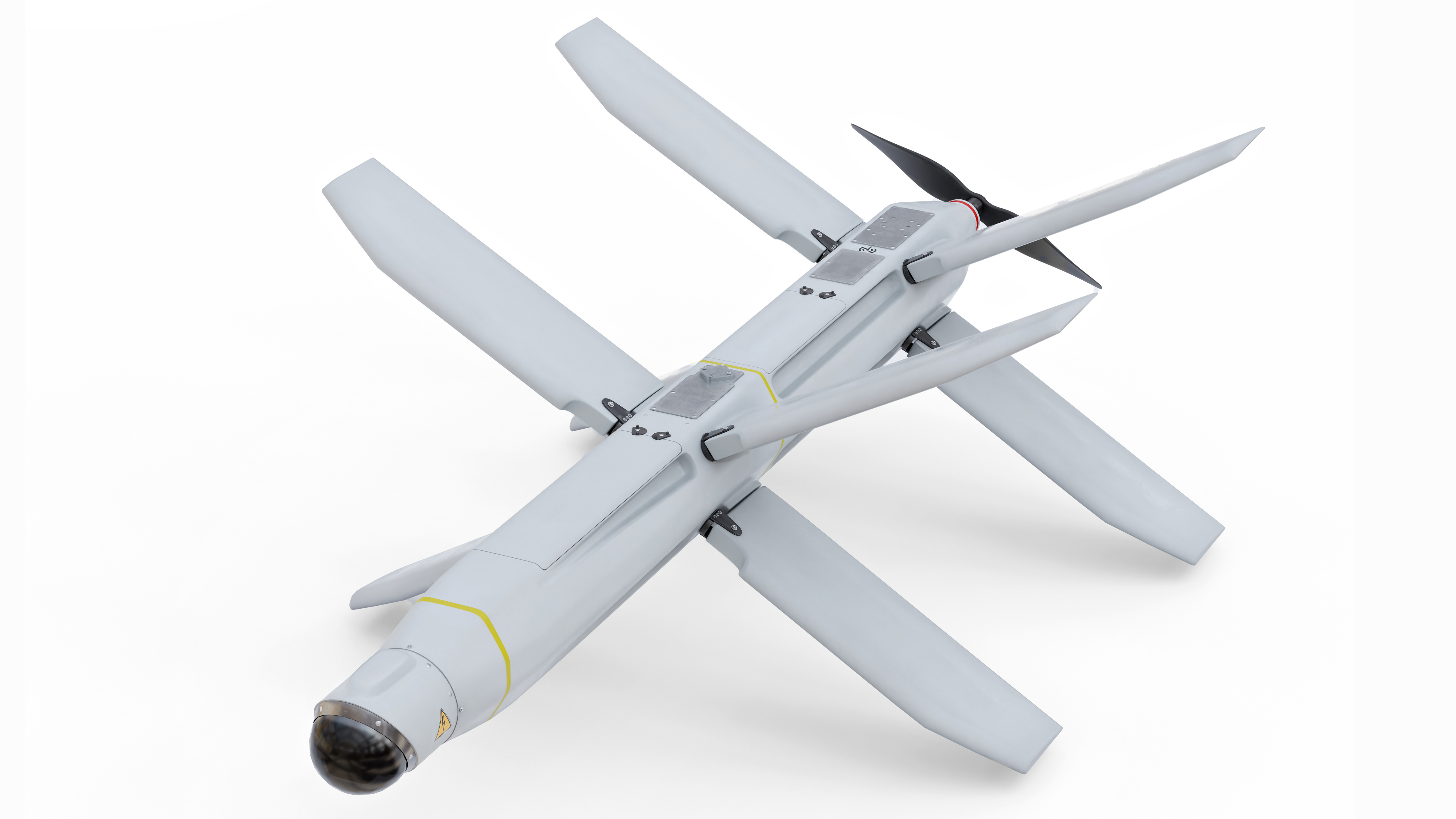
(Fig. Loitering Munition)
Heavy unmanned combat aerial vehicles (UCAVs)
Heavy unmanned combat aerial vehicles (UCAVs) operate primarily at the operational level and carry guided missiles or precision bombs. They play a lesser role in the immediate protection of individual land vehicles, but influence the overall strategic situation and air superiority.
Types of control and guidance for UAVs
The type of control system has a decisive influence on the range, vulnerability, responsiveness and tactical capabilities of a UAV.
With classic radio remote control, the drone is controlled directly by the operator via a radio link. This technology is simple and inexpensive and allows for low latency. At the same time, it is susceptible to electronic interference, range limitations and signal interruptions, especially in contested electromagnetic environments.
FPV control extends this principle to include permanent real-time video transmission. The pilot sees the operational area from the drone’s perspective, enabling them to navigate very precisely and fly directly to targets. This type of control allows complex manoeuvres close to the ground, between buildings or in wooded terrain. At the same time, it increases dependence on stable radio connections, making FPV systems particularly vulnerable to jamming and interference. Nevertheless, this form of control has established itself as extremely effective due to its high probability of success and low cost.
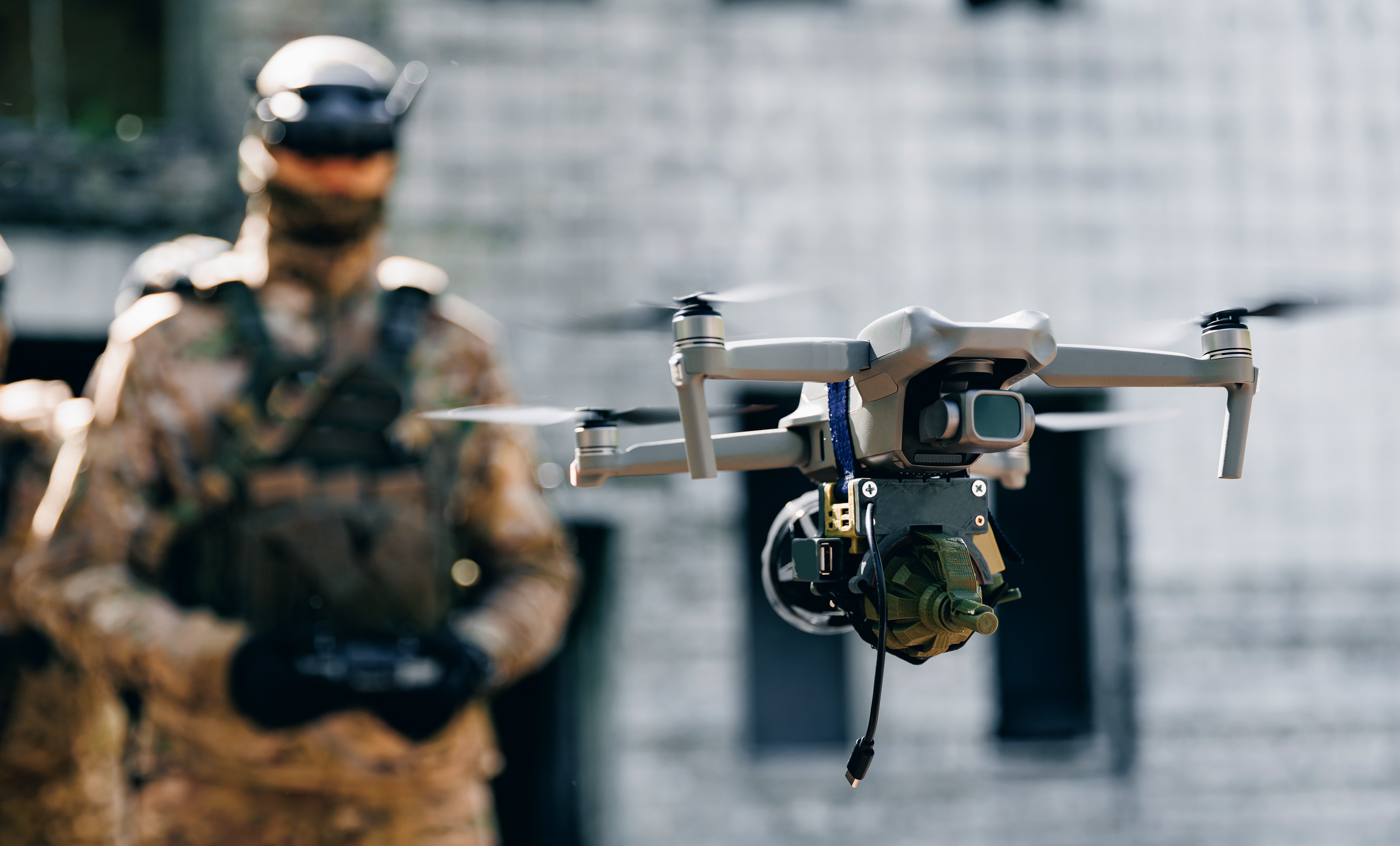
(Fig. FPV Drone)
Wired or fibre optic drones (fibre optic drones) circumvent this weakness by physically transmitting control and video data. This makes them largely immune to radio interference and enables stable image transmission even in highly disturbed electromagnetic environments. Limitations arise from the limited range, the mechanical vulnerability of the cable and the restricted freedom of movement.
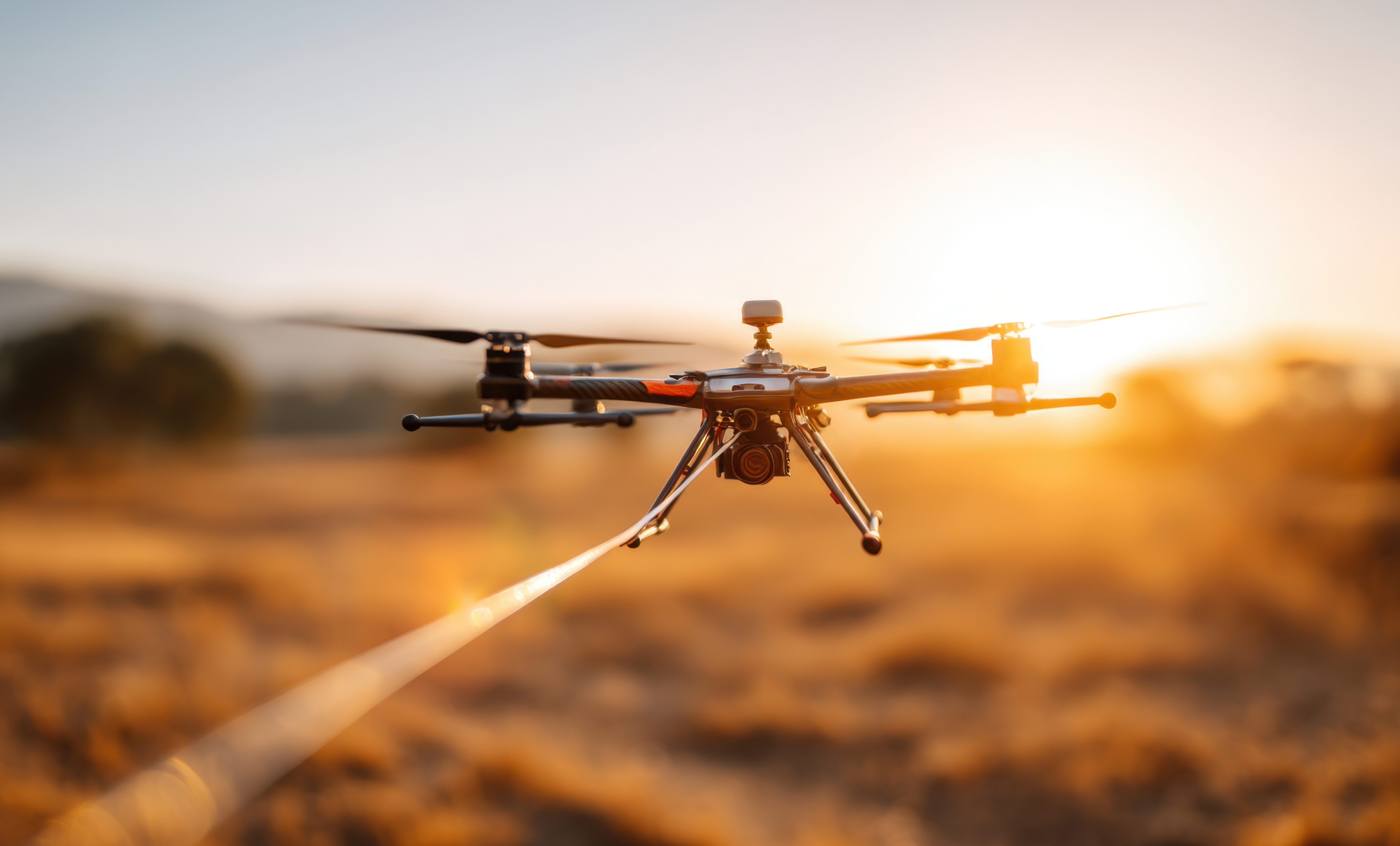
(Fig. Fiberoptic Drone)
Autonomous and semi-autonomous systems use navigation sensors, visual orientation and, increasingly, AI-supported algorithms to carry out specified missions independently. They can fly to waypoints, detect obstacles and, in some cases, classify targets. These systems reduce dependence on permanent radio communication, but increase technical complexity and place new demands on safety, control and legal frameworks.
The control of loitering munitions is a hybrid form. Usually, the system is first guided autonomously to an area of operation, where it circles independently and collects sensor data. The attack can then be authorised by an operator or triggered automatically. This concept combines long range with high precision, but requires robust sensor technology, secure data connections and reliable decision-making logic.
Armament of drones – warheads and modes of action
The effectiveness of UAVs against military land vehicles depends crucially on the payload used. Modern drones can carry a wide range of warheads, each with different modes of action.
Shaped charge warheads generate a directed metal jet that can penetrate even armoured steel. They are often adapted from existing anti-tank systems or specially modified for use in drones. Tandem shaped charges extend this effect by first overcoming protective layers or reactive armour and then penetrating the main armour.
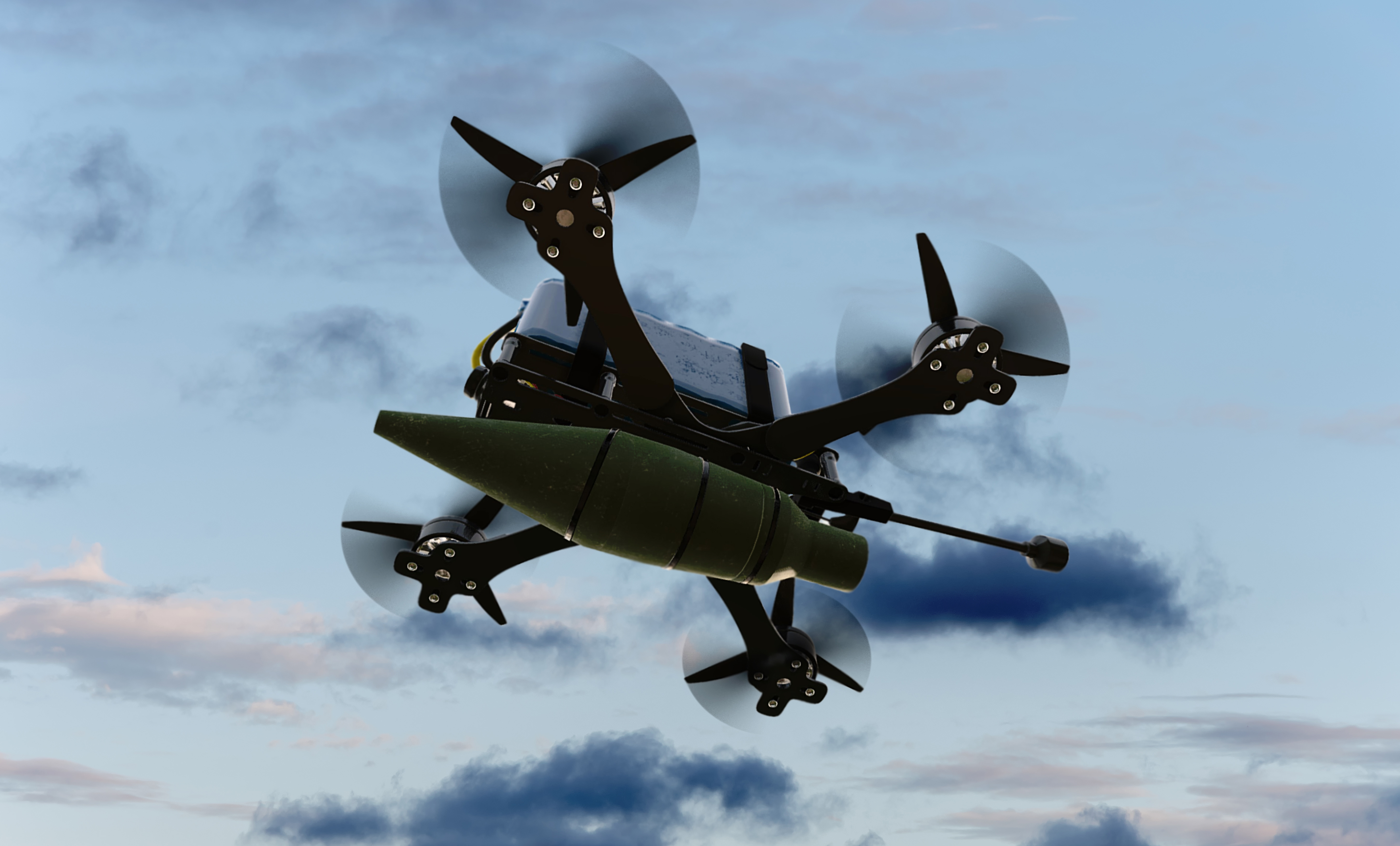
(Fig. RPG Drone – Rocket-Propelled Grenade)
Fragmentation warheads are primarily effective against unarmoured vehicles, external components, sensors and personnel. Although they rarely lead to the complete destruction of a vehicle, they can cause significant functional failures and permanently impair its operational capability.
Explosively formed projectiles (EFP) are high-speed projectiles with high penetration power and a greater standoff distance. Thermobaric and incendiary charges generate intense pressure and heat effects and are specifically designed to destroy sensitive systems inside the vehicle. This range is supplemented by improvised explosive devices, the quality and effect of which can vary greatly.
The vertical attack perspective is particularly critical: even heavily armoured vehicles have comparatively thin roof armour and exposed components that are vulnerable to precise drone attacks.
Countermeasures – soft kill and hard kill in detail
Soft-kill measures aim to disrupt, deceive or impair the operational capability of drones without physically destroying them. Electronic jamming systems suppress control frequencies, navigation signals and video links. Spoofing can mislead drones with false position data or force them to land. These measures are relatively cost-effective and scalable, but they reach their limits with autonomous or wired systems and can also interfere with their own communication systems.
Hard-kill measures rely on the physical destruction of the drone. Classic kinetic weapons such as machine guns, machine cannons and programmable ammunition are increasingly being supplemented by laser and high-energy systems that enable fast, precise action. Interceptor drones are a flexible extension, as they can intercept individual threats in a targeted manner and be adapted to different scenarios. Mechanical protective measures such as cages or nets offer passive protection against direct hits, but can impair mobility and sensor effectiveness.
Active protection systems (APS) play a special role. These systems were originally developed to defend against anti-tank weapons and consist of sensors and effectors that automatically detect and neutralise incoming threats. Modern APS are increasingly designed to detect and combat small air targets such as drones. Their great strength lies in their extremely short response time and autonomous mode of operation. At the same time, their range and effective volume are limited, and misclassifications can pose risks to the immediate environment. Threats occurring at close range and swarm attacks often push these systems to their limits. FPV drones are also difficult to detect due to their rapidly changing flight paths. Nevertheless, APS form an important last line of defence against imminent hits.
Sensor fusion, AI and remote weapon stations
Modern drone defence is increasingly based on the networking of different sensors. Radar detects even small targets at an early stage, optical and infrared sensors enable identification and classification, while acoustic systems can provide additional information. Sensor fusion creates a consistent picture of the situation, which forms the basis for quick decisions.
AI-supported algorithms assist with automatic target detection, prioritisation and tracking. Remote weapon stations can use this data directly to automatically track targets, perform lead calculations and enable semi-autonomous combat. This significantly reduces response times and the burden on the crew.
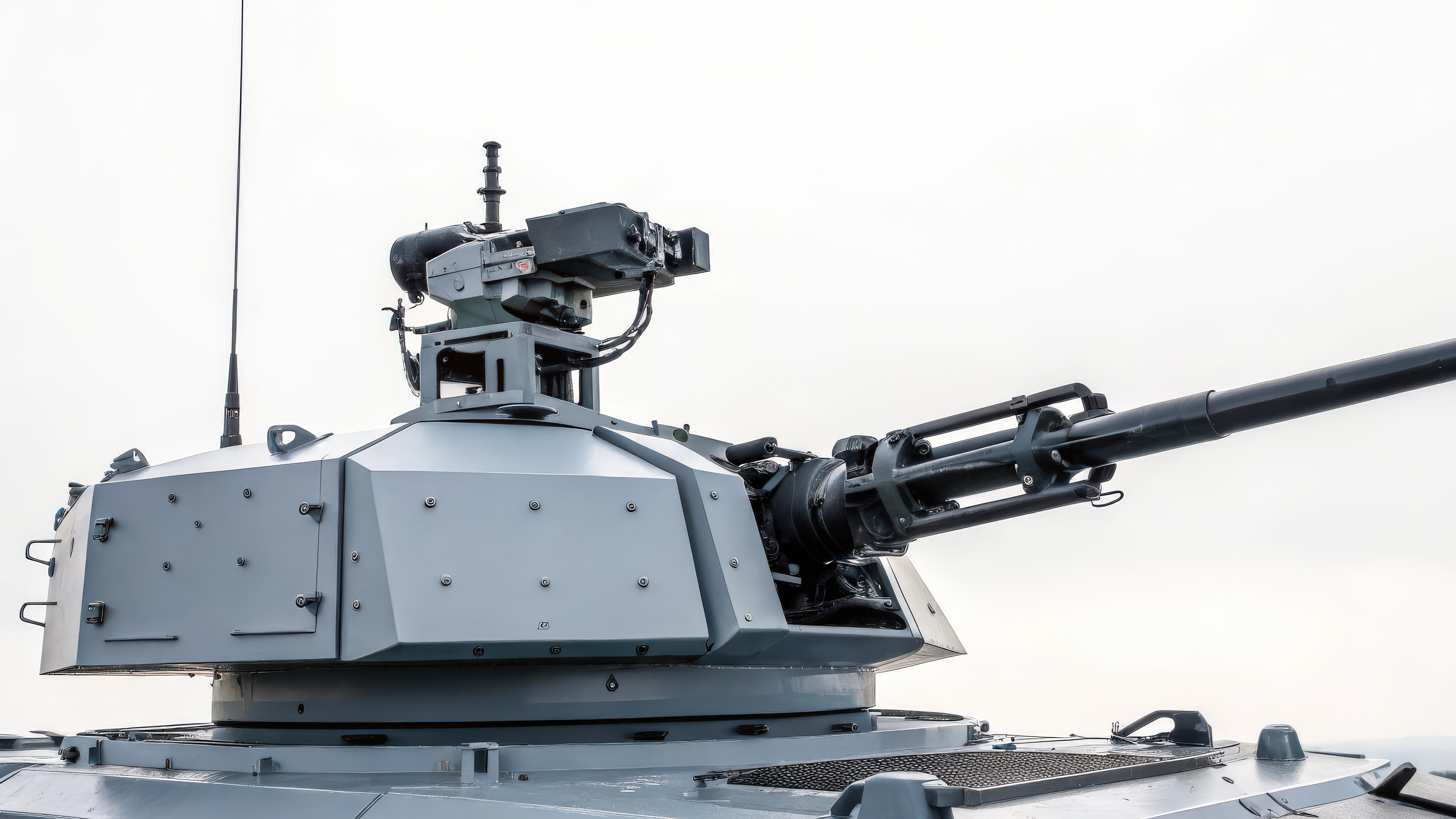
(Fig. Remote Weapon Station)
Integration into vehicle protection systems
Future vehicle protection concepts rely on multi-layered defence. Electronic countermeasures, active protection systems, kinetic effectors and networked sensor technology are being combined into an integrated overall system. Active protection systems take on the role of the final kinetic defence layer, while soft-kill systems and early warning sensor technology act upstream.
By networking multiple vehicles, threats can be detected and combated jointly. In the long term, such systems will also enable coordinated defence against swarm attacks. Challenges remain in terms of integration, costs, interoperability and training.
Summary
Unmanned aerial vehicles have fundamentally changed the threat situation for military land vehicles. The combination of low cost, high precision and rapid technological development makes UAVs a permanent challenge. Effective defence requires integrated protection concepts that intelligently combine sensor fusion, automation, and soft and hard-kill measures. This is the only way to ensure the long-term survivability of mechanised forces.
Mehler Protection is responding to this threat with an innovative active protection system that is specially designed for close and immediate range. SCILT relies on commercially available effectors to effectively and cost-efficiently defend against small drones and drone swarms.
Images and graphics
Mehler Protection, Mehler Vario System GmbH (All rights reserved, 2026)