Blog
28 Jan 2026
Trauma Protection: Materials, Mode of action, Selection Criteria
Trauma protection is a key component of modern protective vests and plate carriers, as it disperses the impulse and energy transfer initiated by the impact of a projectile over a larger area and significantly reduces the residual force transmitted to the body. While soft and hard ballistics are designed to prevent the penetration of a projectile and absorb its kinetic energy structurally, a trauma plate adds an additional level of energy distribution to this system.
Trauma protection minimises the depth of penetration on the side of the body, thereby reducing the risk of injuries such as broken ribs, ruptured spleen or internal bleeding. A reliable system is only created through the interaction of material, design, ergonomics and correct integration.
Trauma Inserts versus Shock Absorbers
Although both terms are frequently mentioned in the context of body armour, trauma inserts and classic shock absorbers serve different purposes. Both aim to reduce the forces transmitted to the body, but they differ significantly in construction, materials and depth of effect
Shock Absorbers
Shock absorbers are usually made of closed‑cell foam or other energy‑absorbing polymers. Their main function is to dampen general impacts, such as those occurring during movement, falls or when carrying hard plates. They reduce superficial injuries such as bruising and often contribute to improved wearing comfort by reducing pressure points.
Shock absorbers do not provide ballistic protection and are not designed to specifically limit the deformation of hard plates under ballistic impact.
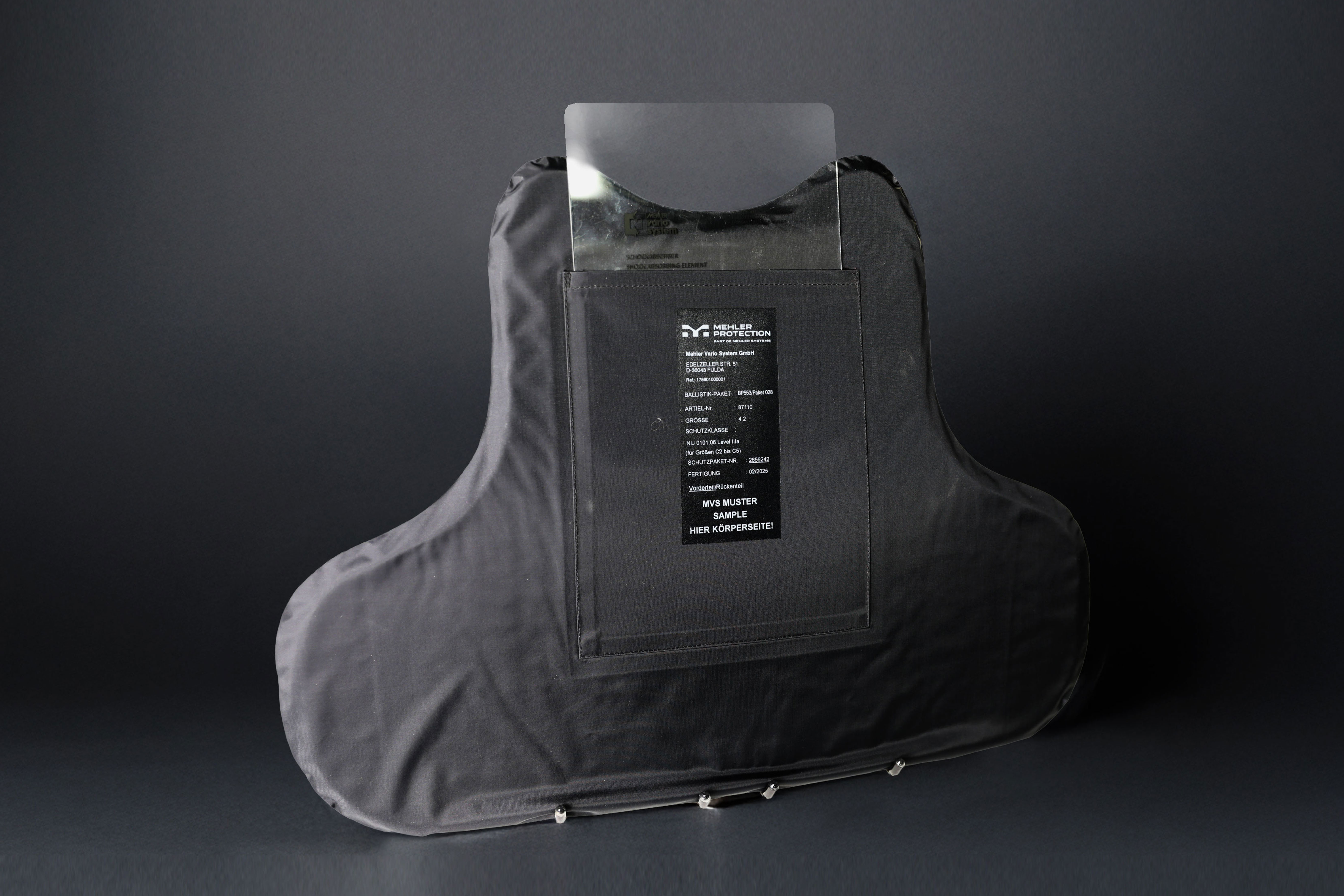
Trauma Inserts
Trauma inserts (trauma pads or trauma plates), on the other hand, are specifically designed to distribute the residual energy generated upon projectile impact over the largest possible area. Although they also absorb energy, they do so with a targeted focus on reducing backface deformation behind a ballistic plate.
These inserts often consist of aramid laminates or similarly high‑performance fibre‑reinforced structures and can reduce backface deformation from, for example, 28 mm to around 14 mm. This significantly lowers the risk of severe internal injuries such as rib fractures or organ trauma.
Important: Trauma protection alone does not provide ballistic protection. It complements hard ballistics and acts as a specialised shock absorber optimised for ballistic impacts.
Key Differences at a Glance
Trauma protection can be understood as a specialised form of shock absorption. While shock absorbers provide general damping, trauma protection is optimised for controlled limitation of plate deformation under ballistic impact. Shock absorbers improve comfort and mitigate light impacts – trauma protection prevents severe internal injuries resulting from the force of a projectile.
An ideal system therefore uses both components in a deliberate manner:
Shock absorbers for comfort and basic damping – trauma protection for critical energy distribution in life‑threatening scenarios.
Mechanisms of Action and Test Standards
The functional principle of trauma protection is based on the controlled redirection and distribution of impact energy. Ceramics break the tip of the projectile and fracture in a controlled manner to distribute forces across a defined area. Fibre composites distribute the remaining energy across many fibres to prevent local overload. Steel absorbs energy through plastic deformation and mass. The decisive factor is the so‑called backface signature, the depth to which the material deforms on the body‑side surface.
Test standards do not only measure the complete stoppage of a projectile; they also assess backface deformation, multi‑hit performance, edge hits and angled shots. Additional damping materials such as non‑Newtonian foams stiffen under sudden impact and further reduce peak forces without noticeably adding weight. The coordination of all layers plays a crucial role in overall performance.
Ergonomics, Geometry and System Integration
Protective performance depends heavily on how well a plate fits the body. Flat or 3D‑shaped plates as well as anatomical cuts affect mobility, pressure distribution and comfort. Shooter’s and swimmer’s cuts improve movement but may reduce coverage in the shoulder area. The size should protect vital organs without restricting breathing or mobility.
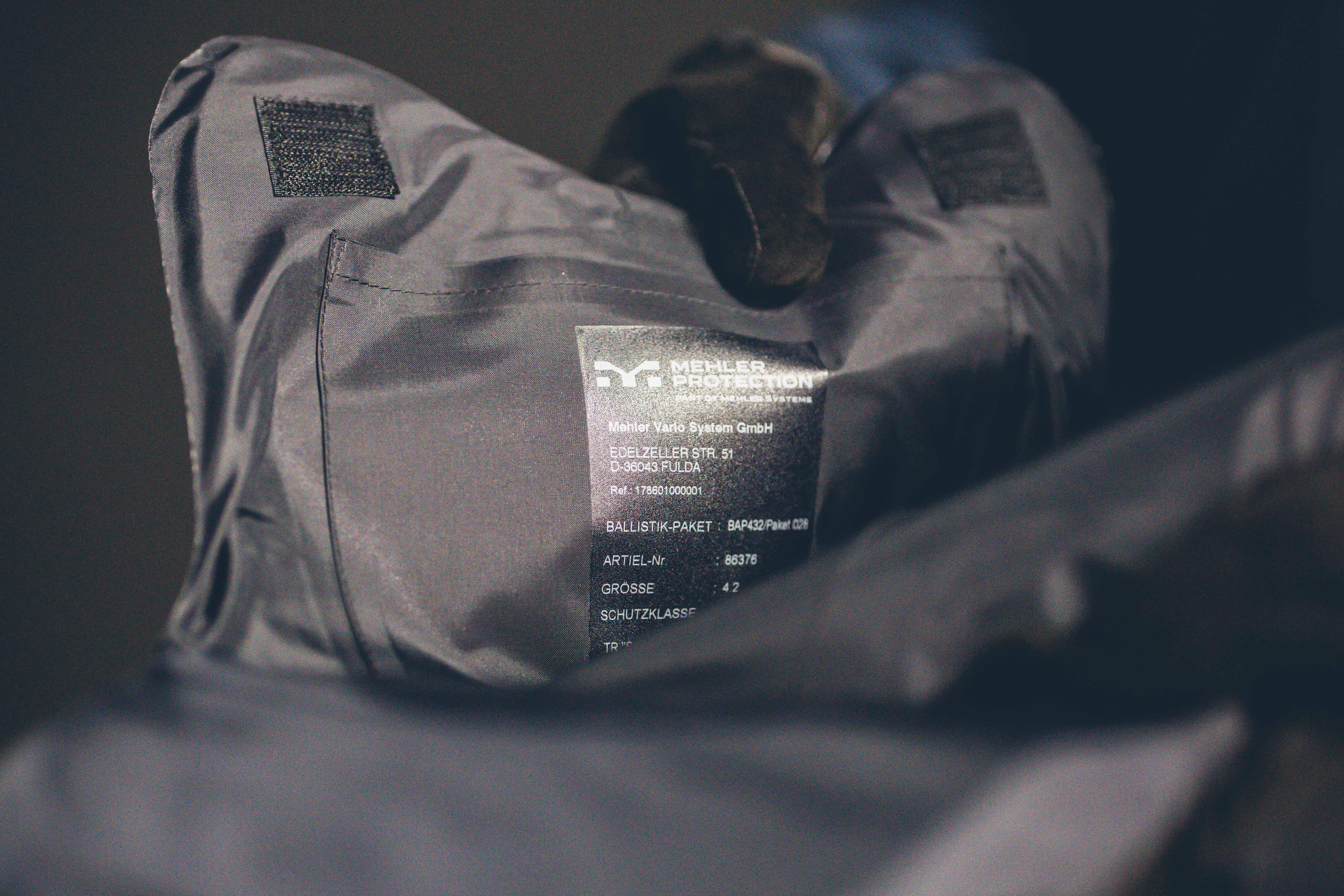
A trauma plate reaches its full effect only within a correctly assembled system. In ICW configurations (in conjunction with), the order of layers is critical: the strike face faces outward, followed by the designated soft ballistics, with the damping material closest to the body. Incorrect combinations or shifting plates can significantly reduce protection. A well‑fitting plate carrier that stabilises the plate is therefore just as important as the plate itself.
Operational Profiles, Care and Service Life
The specific operational purpose determines the requirements. Everyday police duties with predominantly handgun threats differ significantly from military missions involving rifle fire and fragmentation hazards. Close protection or civilian applications place greater emphasis on lightweight solutions, discreet designs and high wearing comfort. Material selection should always be based on a realistic threat assessment and the intended duration of wear.
Care conditions also affect service life. Ceramic plates should be protected from drops and inspected regularly, as invisible damage is possible. Steel requires corrosion protection and an intact coating, while UHMWPE should not be exposed to high temperatures or UV radiation for extended periods. Manufacturer instructions regarding cleaning, storage and expiry dates are binding; self‑modifications such as drilling or cutting can destroy protective performance.
Selection Criteria
Choosing the right trauma insert always begins with an analysis of realistic threats and the operational environment. Only then do material comparisons become meaningful: steel offers robustness, ceramic hybrids provide high performance at moderate weight, and UHMWPE enables extremely lightweight constructions with certain trade‑offs. Ergonomics, fit and system compatibility are just as important as maintenance requirements, legal considerations and total weight.
Summary
Trauma protection is not a replacement for soft or hard ballistics but a highly effective enhancement of overall protective performance. It distributes impact energy, reduces backface deformation and significantly increases practical protection. Those who clearly distinguish terminology, understand materials and combine components correctly create a system that reliably protects critical areas while remaining suitable for everyday use.
Images and graphics
Mehler Protection, Mehler Vario System GmbH (All rights reserved, 2026)