Blog
29 Apr 2026
Armed drones with drop-off munitions: risks and countermeasures for military land vehicles
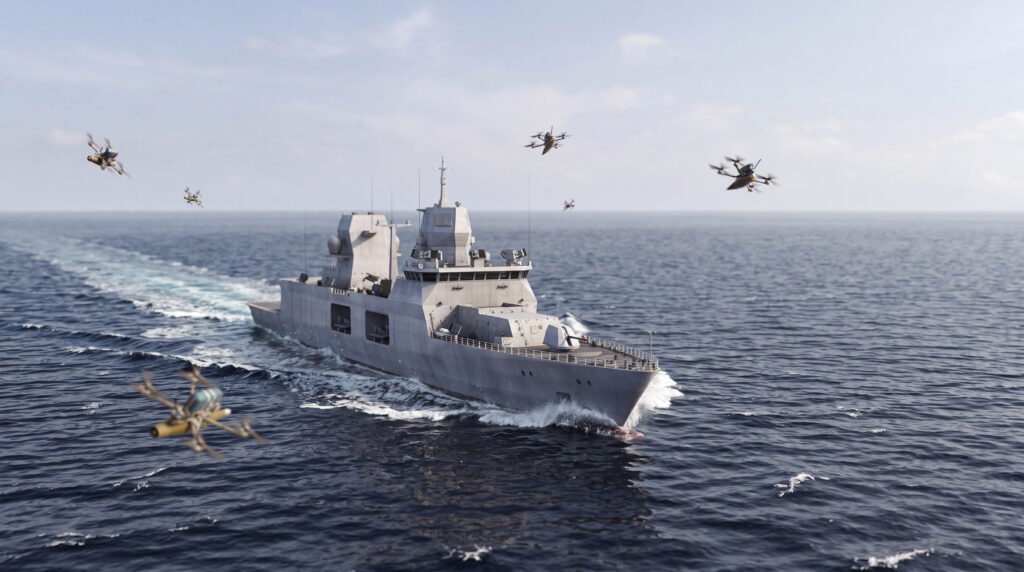
In recent years, unmanned aerial vehicles have evolved from purely reconnaissance platforms into versatile weapon systems. Alongside FPV kamikaze drones and loitering munitions, the focus is increasingly shifting to multicopters that do not carry and detonate munitions themselves, but instead drop them from the air with precision. This so-called drop-off munition opens up new tactical possibilities, as the drone can be deployed multiple times and attacks can be carried out from varying altitudes.
This creates an additional dimension of threat, particularly for military land vehicles, as traditional protection concepts are primarily designed to counter direct fire or impact threats and have so far only taken vertical attacks into account to a limited extent.
Armed multicopters with drop-off munitions
In addition to traditional kamikaze drones and highly agile FPV systems, commercially available multicopters with drop mechanisms in particular have established themselves as effective and flexible attack platforms. These drones carry one or more explosive payloads, which are dropped from the air to target vehicles, positions or infrastructure. The attack is usually carried out from a vertical or steeply inclined position, enabling specific areas of land vehicles that are structurally less well-protected to be targeted – such as roof armour, engine covers, open hatches, external sensors or weapon stations. Particularly in asymmetric conflicts, it is evident that even relatively simple civilian platforms can achieve a significant military impact through minor modifications.
Unlike conventional kamikaze systems, the platform generally remains intact and can carry out multiple drops during a single mission. This increases operational efficiency and allows a target area to be monitored over a longer period and attacked repeatedly. It is particularly relevant that drops are not limited to low altitudes. In practice, drop altitudes of 150 to 300 metres and above are not uncommon. These altitudes make visual detection more difficult, are in some cases beyond the effective range of light weapons, and significantly reduce acoustic detectability. At the same time, strike accuracy remains sufficiently high thanks to modern stabilisation, precise altitude control and high-performance optical sensors, enabling effective operation even from greater heights.
Operating principle
The drone approaches the target at low to medium altitude and either assumes a stable hovering position or follows a slow overflight path. The munitions are released via an electrically or mechanically triggered release mechanism, which can be activated by the operator or controlled automatically. Modern multicopters are equipped with sophisticated stabilisation systems, precise altitude control and high-resolution cameras, which allow for very accurate target observation. In conjunction with digital zoom functions and image stabilisation, the operator can precisely determine the drop point, even under restricted visibility conditions.
Accuracy depends on several factors, including flight altitude, wind conditions, the drone’s speed and the ballistic properties of the munitions used. Some systems already employ simple computer-assisted corrections to determine the optimal release time. The major advantage of this concept lies in its reusability: a single drone can carry out multiple drops within a single mission, which both reduces costs and increases tactical flexibility.
Typical types of munitions
When selecting drop munitions, there is a wide range of improvised and military-developed solutions. Modified hand grenades or fragmentation charges are frequently used, primarily targeting unarmoured vehicles, exposed components, antennas or un d personnel. These types of munitions are comparatively light, cost-effective and easy to integrate; however, they primarily generate an area and fragmentation effect rather than structural penetration capability.
Shaped-charge grenades, which are based on the principle of directed energy and can penetrate even heavier armour, achieve significantly greater effectiveness against vehicles. Such charges are either adapted from existing military munitions or specifically optimised for drone deployment. Particularly when dropped with precision onto roof surfaces or engine compartments, these warheads can cause significant structural damage.
- Bomblet 3B30 shaped-charge munition
- RKG-3 shaped-charge hand grenade
- EFP top-attacking landmine PTKM-1R
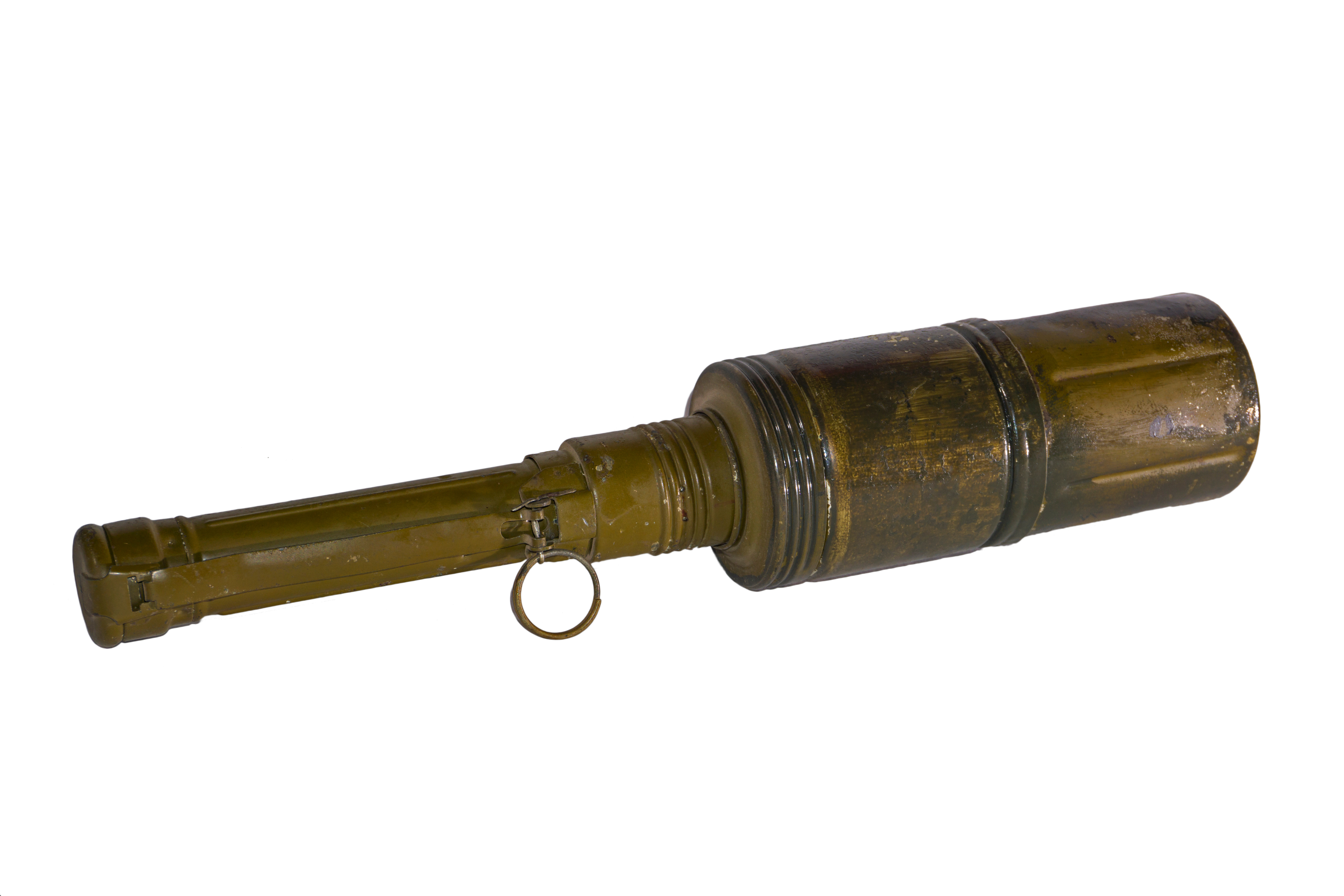
(Fig. RKG-3 shaped-charge hand grenade)
So-called EFP projectiles are technically more sophisticated; they generate an explosively formed projectile that strikes the target at high speed. These systems allow for greater effectiveness even at a slight distance between the charge and the target, but require precise manufacturing and stable alignment.
In addition, incendiary and thermal charges are increasingly being used. These do not so much cause immediate destruction as aim to render critical vehicle components such as electronics, optics, wiring harnesses or ammunition permanently inoperable. In addition, sensor or mine-dropping systems are also being tested in isolated cases, with the aim of monitoring areas or delaying movements.
Tactical advantages of drop-off drones
The greatest tactical advantage of drop-off drones lies in their reusability and flexibility. A single platform can engage multiple targets in succession or deploy different types of munitions without being lost itself. This enables the efficient use of limited resources and also allows for longer surveillance and engagement phases over an operational area.
Added to this is their high accuracy, particularly against stationary or slow-moving vehicles. The combination of stabilised flight, real-time image transmission and precise control enables targeted attacks on vulnerabilities. At the same time, the costs of such systems are comparatively low, as many components are sourced from the civilian market and can be replaced quickly. The low signature and short reaction time also make early detection and interception by conventional air defence systems more difficult.
Operational disadvantages and limitations
Despite their advantages, drop-off drones are also subject to clear limitations. Their payload is limited, meaning that the effectiveness of individual drops is often insufficient to completely destroy heavily armoured vehicles. Range and operational duration depend on battery capacity and weather conditions; in particular, wind, rain or poor visibility can significantly reduce operational capability.
Furthermore, these systems remain vulnerable to electronic countermeasures, particularly radio jamming and navigation interference. Mechanical vulnerabilities – such as those caused by small arms fire or interceptor drones – also limit their survivability in high-intensity combat environments.
Threat to military land vehicles
For military land vehicles, drop-off drones pose a serious threat, particularly to unarmoured and lightly armoured platforms such as logistics vehicles, command vehicles or wheeled vehicles. Vehicles that are stationary, for example during maintenance or refuelling operations, are also particularly at risk. Even if complete destruction is not achieved, damage to sensors, weapon stations or electrical systems can severely impair operational capability.
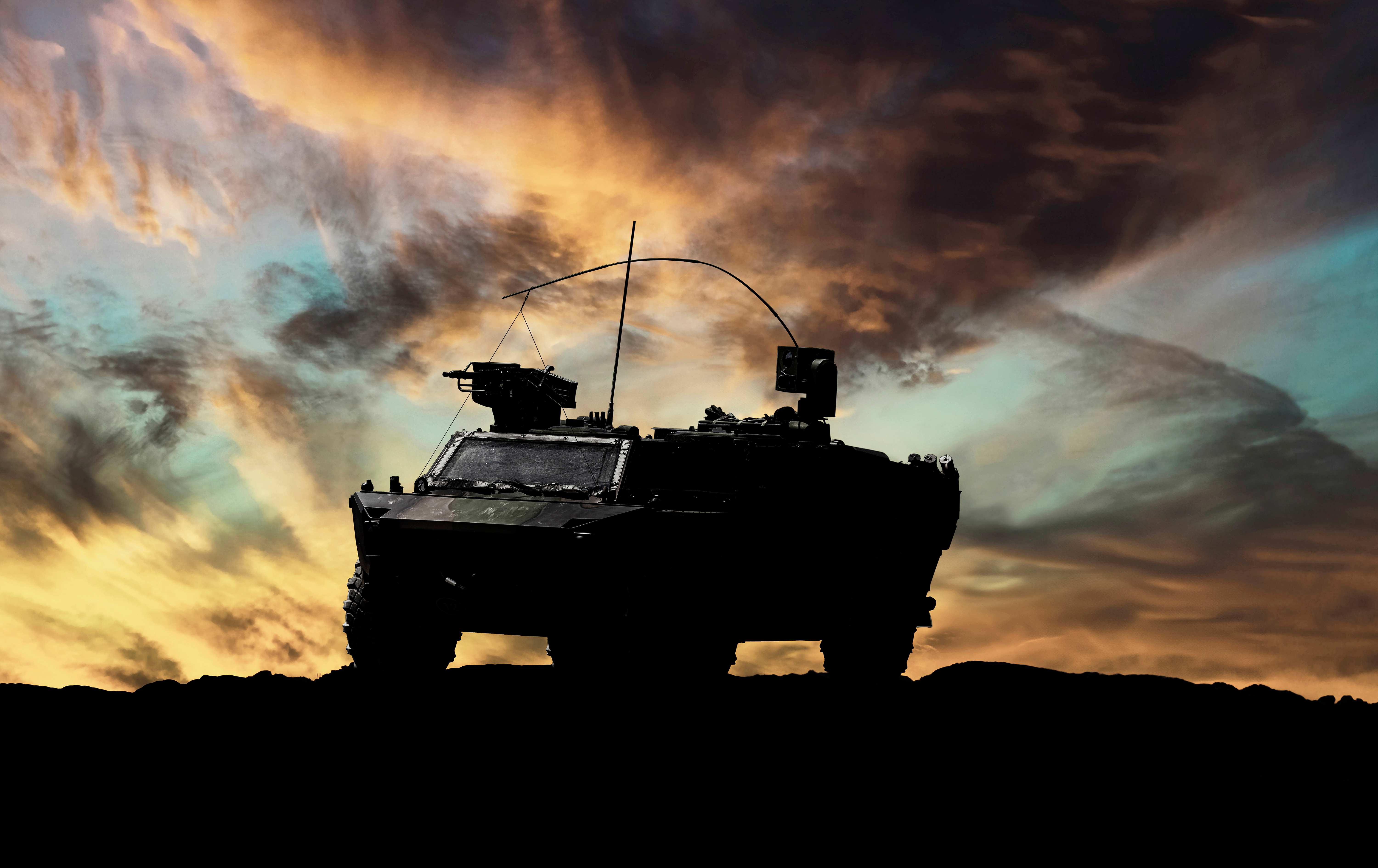
The possibility of attacks from medium altitudes – up to several hundred metres – significantly expands the operational range and overwhelms traditional close-range protection concepts. Vehicles must increasingly assume that they are under constant surveillance and potentially under attack, even outside the immediate vicinity of the front line.
The vertical attack perspective undermines traditional protection concepts, which are primarily designed to counter frontal and lateral threats. This creates a need to adopt a more three-dimensional approach to vehicle protection in future and to view drone defence not merely as the task of specialised air defence units, but as an integral part of mechanised formations.
Defence and protection measures against drop-off drones
Defending against drop-off drones poses particular challenges, as these systems can operate both at low altitude and from greater heights. Drop altitudes of up to around 300 metres – and in some cases even higher – are already beyond the effective engagement range of many on-board weapons, whilst simultaneously making visual detection and identification more difficult. This significantly increases the demands on sensor technology, networking and reaction speed.
Early detection is a key component. Small multicopters have only weak radar, thermal and acoustic signatures, which is why conventional military sensors alone are often insufficient. Modern concepts therefore rely on sensor fusion, combining short-range radars, electro-optical and infrared cameras, passive radio reconnaissance and acoustic sensors. The integration of this sensor data creates a more robust situational picture, enabling earlier detection and more reliable classification. AI-supported evaluation algorithms assist with automatic target detection, distinguishing between genuine threats and false alarms, and prioritising multiple targets.
At the soft-kill defence level, electronic countermeasures are employed. Radio jamming can interrupt control links, video links or navigation signals, causing the drone to lose stability, switch to a safety mode or abort the mission. These measures are particularly effective against civilian multicopters. However, there are limitations with regard to tethered systems or highly autonomous drones, which are less dependent on radio links. Furthermore, intensive jamming can impair one’s own communication and navigation and therefore requires careful tactical coordination.
Where electronic measures are insufficient or an immediate threat exists, hard-kill approaches are required. These include machine guns, automatic weapon stations and specialised ammunition optimised for small aerial targets. However, the effectiveness of these systems drops significantly against higher-flying drones, as range, target acquisition and probability of hit are limited, and the available reaction time is often very short.
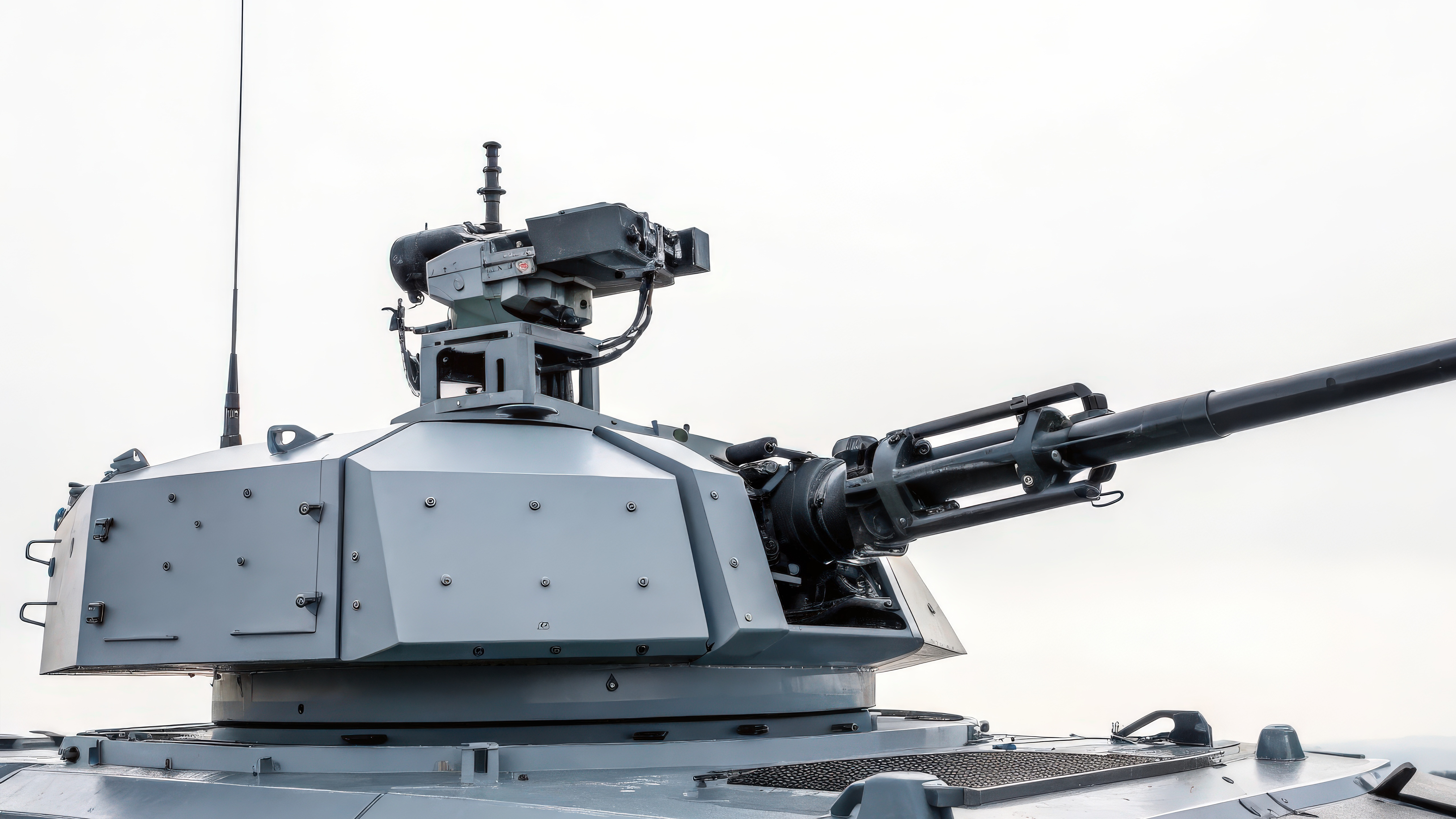
(Fig. Remote Controlled Weapon Station)
Interceptor drones represent an increasingly important addition. These interception systems are specifically designed to track enemy multicopters and neutralise them by ramming, using nets or small explosive charges. They offer a flexible defence capability even at higher altitudes and can accompany mobile formations. At the same time, they require additional training, logistics and close integration into command and sensor systems.
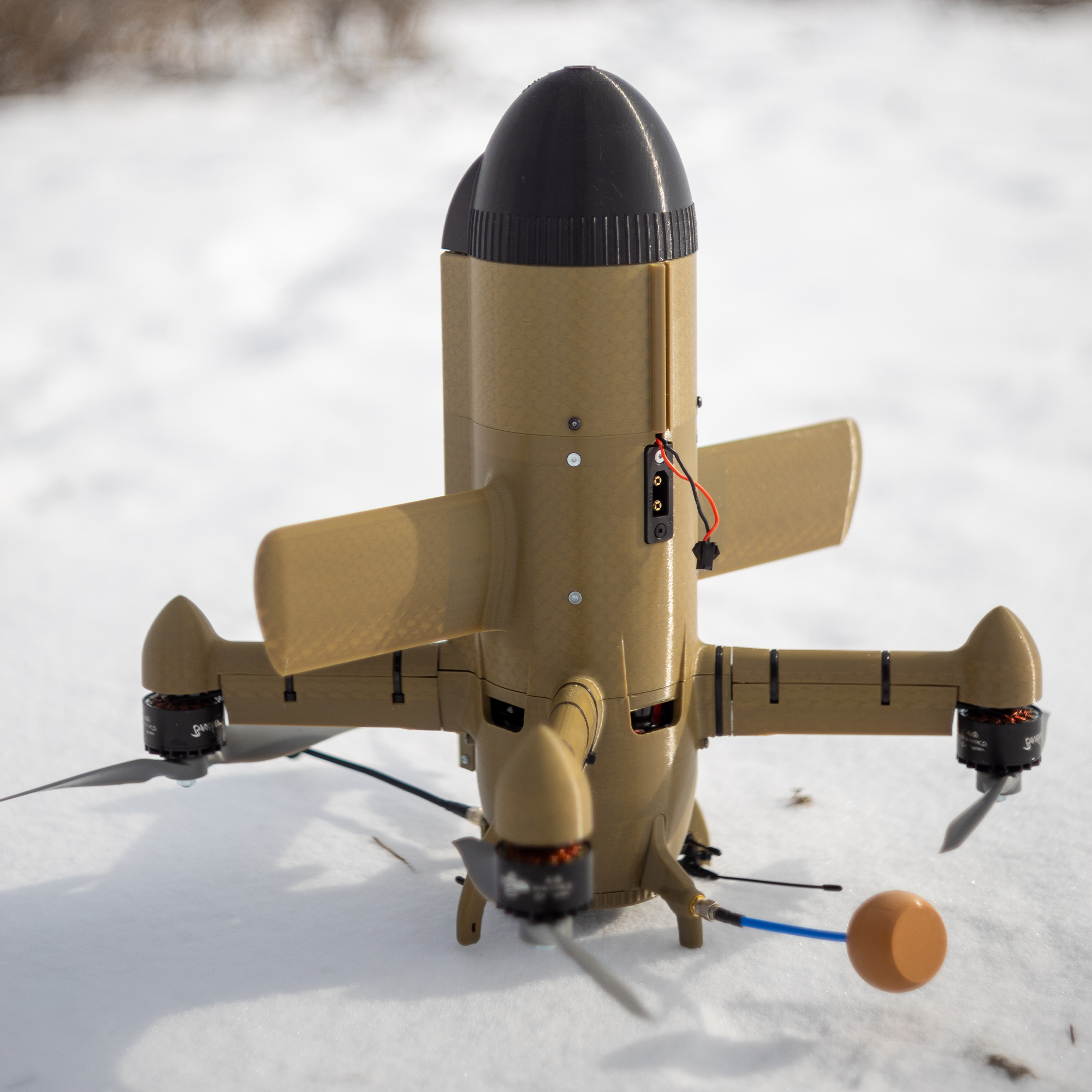
(Fig. Interceptor Drone)
Passive protective measures remain relevant as a supplement. Mechanical protective solutions such as grilles, nets or cage structures can reduce the impact of dropped munitions or delay detonation. However, their protective effect diminishes with increasing drop height and charge energy. Structural measures such as improved roof armour, redundant sensor systems and protected cable routing further enhance resilience. Tactical measures such as frequent position changes, camouflage, avoiding prolonged stationary periods and decentralised deployment remain indispensable components of a holistic protection concept.
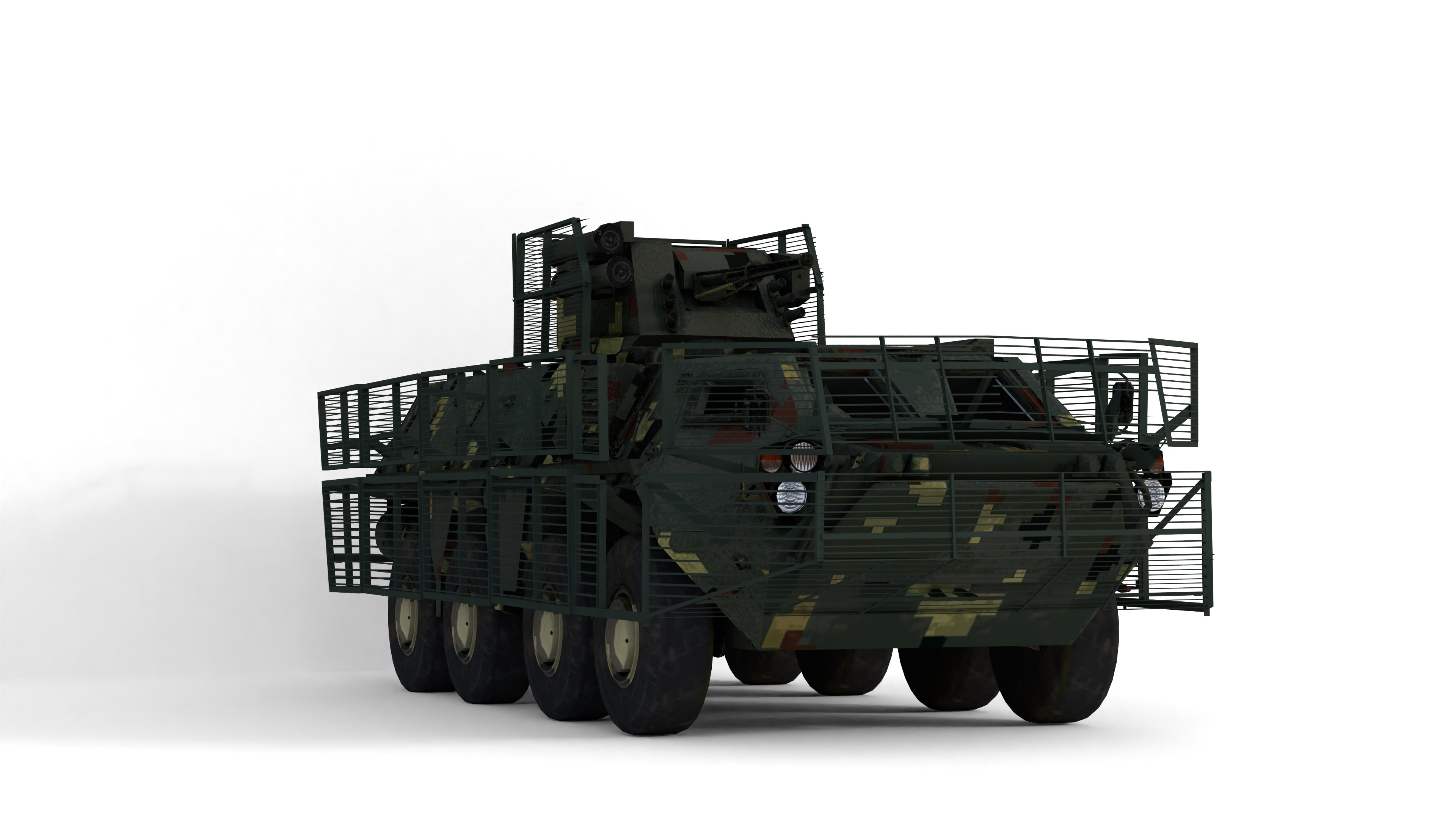
(Fig. Tank with cage)
In the long term, a multi-layered defence architecture will be required that integrates detection, electronic countermeasures, kinetic defence, interceptor systems and passive protection, and coordinates these largely automatically.
Conclusion
Armed multicopters carrying drop-off munitions have established themselves as a flexible, cost-effective and effective threat to military land vehicles. Their ability to attack from a vertical perspective and from medium altitudes undermines traditional protection concepts and significantly increases the vulnerability of unarmoured and lightly armoured platforms in particular. The reusability of the drones, the high adaptability of the munitions used and the ease of scaling further exacerbate this threat.
The analysis shows that drop drones must not be viewed in isolation, but are part of a broader spectrum of UAV threats, ranging from FPV systems to loitering munitions. In particular, the combination of low-cost platforms, precise sensor technology and increasing automation is bringing about a lasting change in the dynamics of combat.
Effective defence therefore requires a multi-layered, integrated protection concept. Early detection, sensor-based situational awareness, AI-supported analysis, electronic countermeasures, kinetic defences, interceptor drones, as well as structural and tactical protection must all work in tandem. What is crucial is not only the performance of individual components, but also their interconnectivity, reaction speed and robustness in real-world operations.
With ongoing technological development and the continued proliferation of autonomous functions, the threat posed by UAVs will continue to grow. Military land vehicles must therefore be consistently regarded in future as part of a three-dimensional battlefield, in which protection is no longer based exclusively on armour, but on networked, adaptive and intelligent systems.
Mehler Protection is therefore developing new protection concepts that go far beyond traditional, passive systems. These include active systems as well as interception systems which, in the event of drop-off munitions, not only create distance but also prevent the effectors from being triggered.
Images and graphics
Mehler Protection, Mehler Vario System GmbH (All rights reserved, 2026)