Blog
18 May 2026
Modern body armour systems: Protection concepts for mitigating life-threatening impacts in the field
Modern ballistic body armour systems are designed to protect the wearer from the lethal effects of projectiles and/or shrapnel. At the same time, the wearer’s body is subjected to considerable mechanical and physiological stress. A realistic understanding of these stresses is crucial for procurement, operational concepts and training.
How ballistic protection systems work
Ballistic protection systems essentially have two objectives:
- To prevent penetration by projectiles and fragments.
- Controlled energy absorption and distribution to limit the impact on the body.
Depending on the system, different components are used:
Soft ballistic materials (e.g. aramid, PE or hybrid fabrics)
Soft ballistic packages usually consist of high-performance fibres such as aramid, polyethylene (PE) or hybrid fabrics. These materials are designed to stop projectiles and fragments from small arms ammunition.
- typically stops small arms ammunition and fragments
- The protective effect of soft ballistics is essentially based on three mechanisms: fibre tension, delamination and friction
- deforms predictably towards the body (‘backface deformation’, BFD – the deformation of the protective package towards the body)
Hard ballistics (e.g. ceramic, steel or composite plates)
When it comes to higher energies and long-barrelled weapon threats, soft ballistics alone reaches physical limits . This is where hard ballistics components come into play – in the form of ceramic, steel or composite plates that are integrated into carrying systems or mounted on top of soft ballistics.
- Designed for higher energies and long-barrelled weapon threats
- Hard ballistic plates are designed to operate on different principles than soft protection packages
- Projectile fragmentation/deceleration, high inherent stiffness and multi-layered composite structures
- usually in combination with soft ballistics to absorb residual energy
Energy transfer into the body
Even with complete projectile deflection, part of the kinetic energy enters the wearer’s body. Relevant influencing factors are:
- Projectile mass and velocity (E = ½ m v²)
- Angle and area of impact
- Construction, thickness and damping properties of the protective package
- Point of impact (near the sternum, predominantly on the ribs, lateral areas)
The resulting stress typically manifests as:
- a short-lived, highly dynamic pressure pulse
- local deformation of the body armour towards the body
- stress distributed across the soft tissues and bony structures
In ballistic testing, limit values for deformation (Backface Signature, BFS; also Backface Deformation, BFD) are established for this purpose in order to limit serious injuries caused by the recoil of impacts.
Injury patterns with stopped projectiles
Although penetration is prevented, recoil forces may act on the body in the form of blunt trauma, i.e. injuries caused by energy transfer without penetration.
Typical findings from practical and test environments include:
- subcutaneous haematomas (bruises) in the impact zone
- contusions of muscle and connective tissue
- rib contusions, and in extreme cases rib fractures
- temporary restriction of mobility in the shoulder/chest area
These recoil stresses arise from the transfer of energy without penetration and are classified as blunt force trauma. The severity depends on the protection class and the ratio between energy input and the system’s damping capacity.
Soft ballistics vs. hard ballistics: Stress profiles
Soft ballistic systems
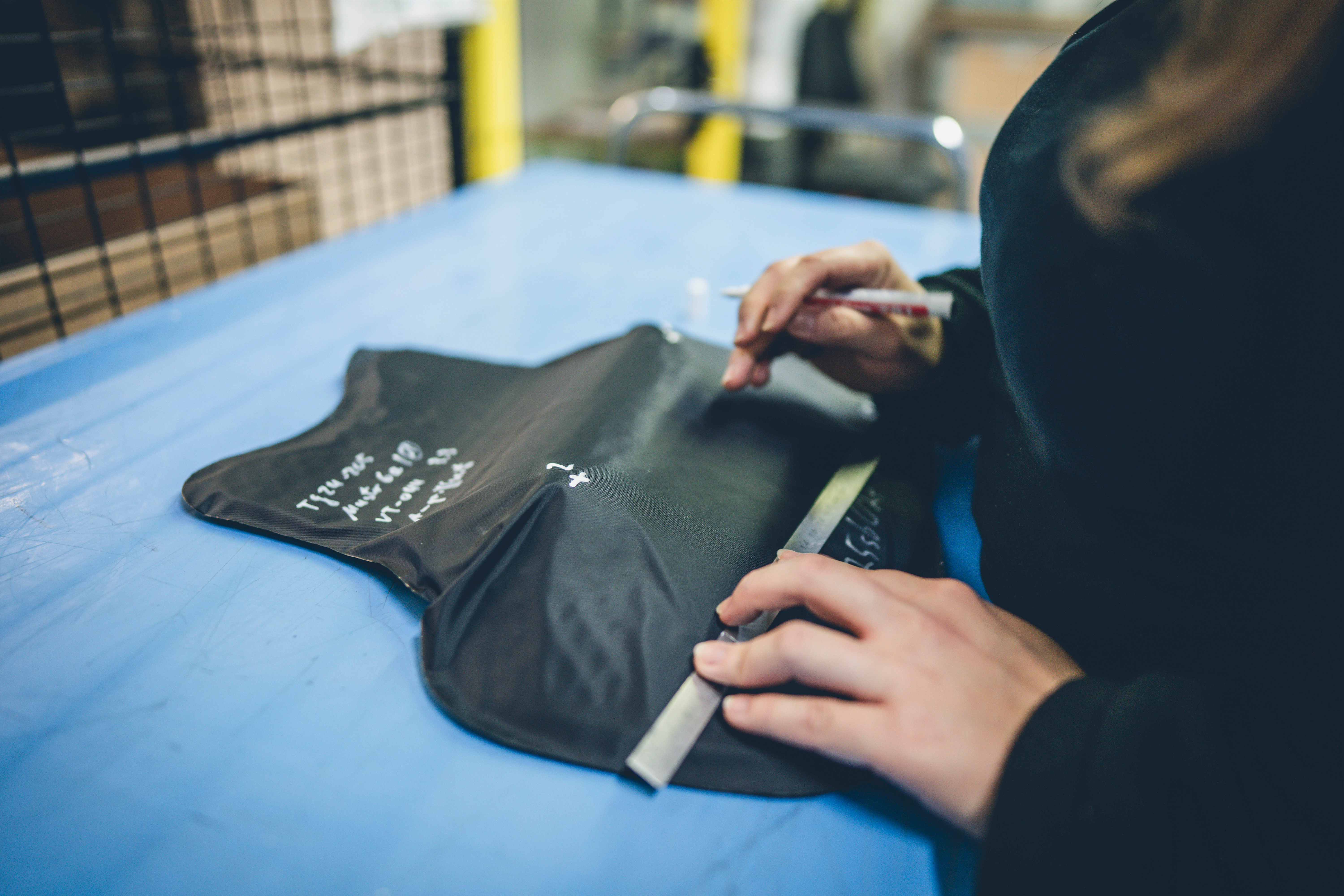
- greater, controlled deformation towards the body
- comparatively more even load distribution
- greater comfort during normal use (flexibility, adaptability)
- Typically significant, but not life-threatening, soft tissue injuries under extreme stress
Hard ballistic systems
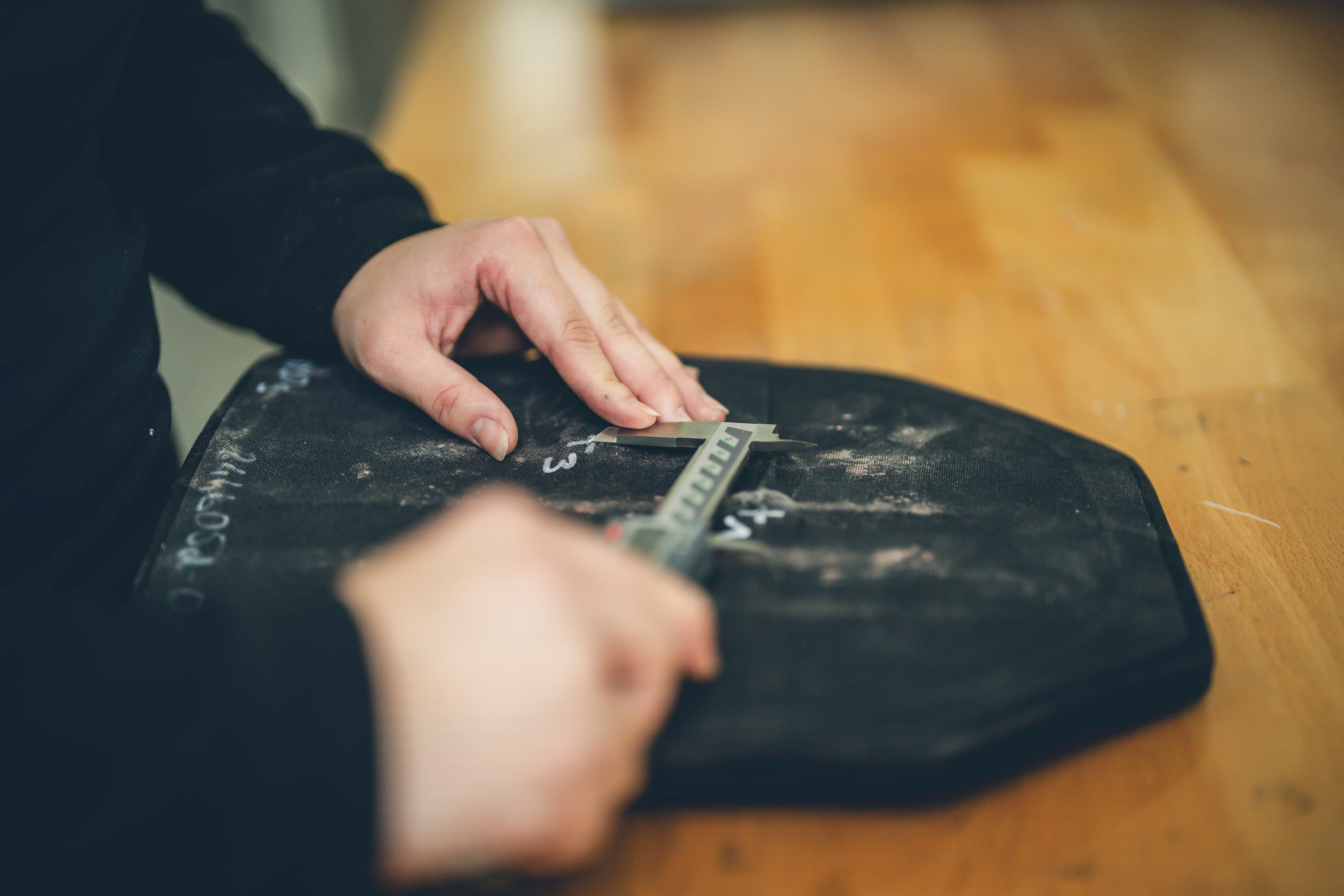
- Very high rigidity, lower deformation
- Point loads may be perceived as harder and more abrupt
- In combination with a damping/spall liner, the pressure is transferred to the underlying soft ballistic system
- Designed for high energies and multiple-impact scenarios
In modern system designs, both technologies are combined to achieve an optimised balance between protective performance, mass, comfort and energy distribution.
Physiological and ergonomic aspects
In addition to the immediate impact of a hit, body armour affects the wearer in daily use:
Mass and load distribution
- Additional load of several kilograms in the upper body area
- Impact on posture, movement patterns and fatigue
Restricted mobility
- Reduced flexion/rotation in the upper body
- Adjustment of shooting and handling techniques required
Thermal stress
- Reduced heat dissipation via covered body areas
- Increased fluid requirements, accelerated fatigue
These factors must be taken into account in training, operational planning and the selection of suitable system configurations (protection class vs. weight).
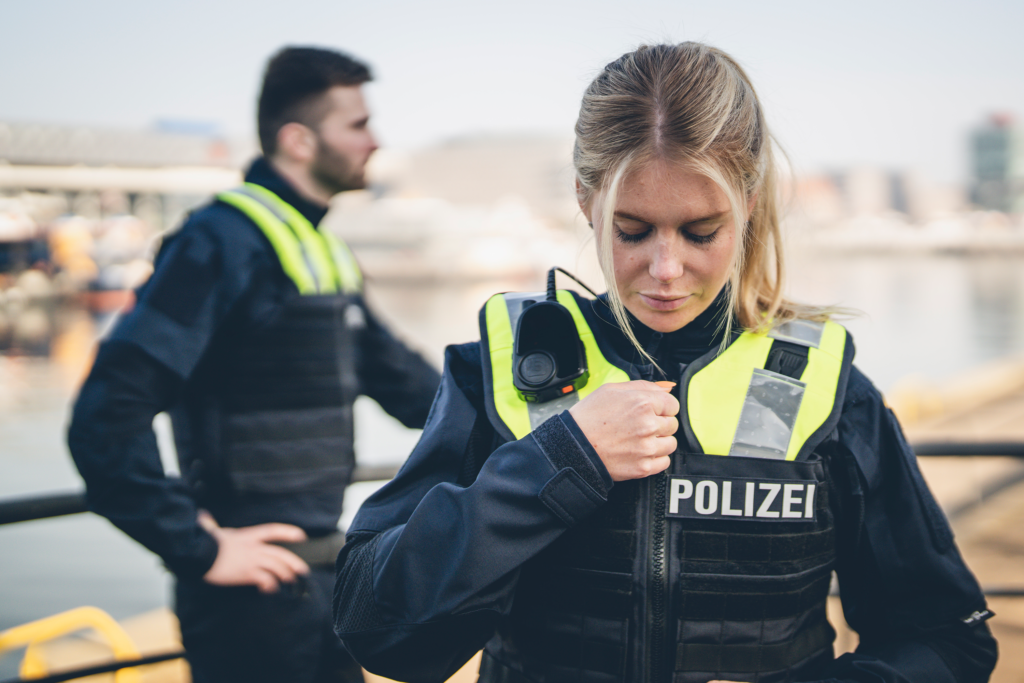
Importance of fit and adjustment
The protective effect of modern systems can only be fully utilised if they are correctly fitted. Key points:
- sufficiently large, but not oversized, protective area
- correct height (covering the heart, lungs and major blood vessels)
- a snug, close-fitting fit to reduce relative movement between the body and the protective gear
- Compatibility with carrying systems, straps, radio and weapon systems
A protective vest that is incorrectly adjusted or ill-fitting can both reduce the protective effect and increase the impact in the event of a hit (e.g. due to unfavourable edge positions).
Role of training and operational concepts
Technical protection is most effective when combined with:
- tactical training (movement, cover, reaction to being hit)
- physical preparation (core stability, endurance, strength)
- training that raises awareness of realistic stresses and the system’s limitations
The aim is for the wearer to be able to cope physically and mentally with the short-term stresses in the event of a hit and to remain capable of acting.
Summary
Modern body armour systems transform a potentially lethal projectile threat into:
- a controlled, standard-compliant transfer of energy into the body
- predominantly non-penetrating injuries, the extent of which is accepted in order to ensure survival.
The key factor is the interplay between:
- appropriate protection class,
- sophisticated system architecture (soft and hard ballistics, cushioning, ergonomics),
- correct fitting, and
- targeted staff training
Images and graphics
Mehler Protection, Mehler Vario System GmbH (All rights reserved, 2026)