Blog
4 Aug 2026
Train as you Fight: Why realistic training is crucial for the police and the military
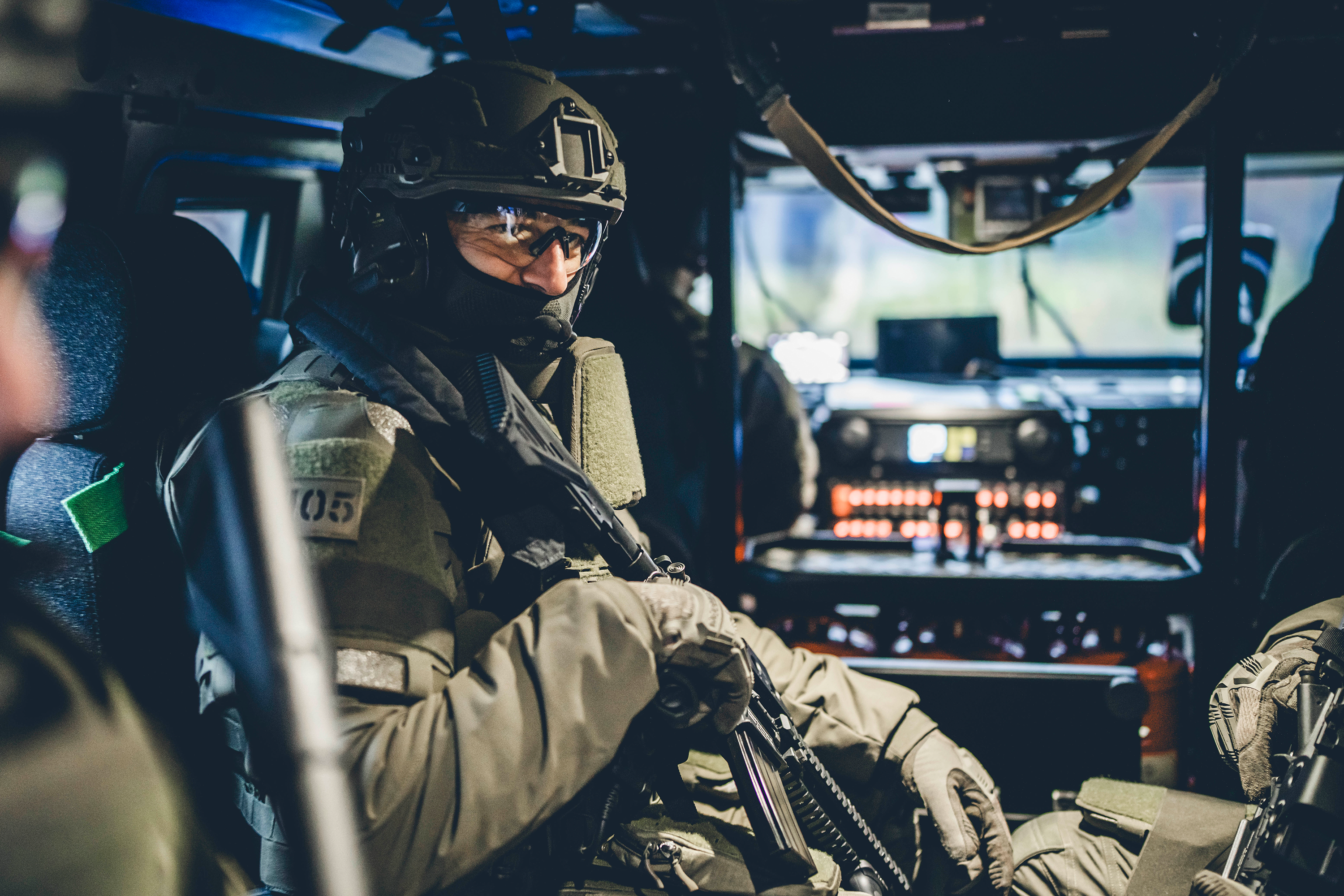
‘Train as you fight’ is more than just a motivational slogan. For police and military personnel, it means training in conditions that reflect the realities of how they will ultimately have to fight, protect themselves and others, and make decisions. Only those who train under conditions that closely replicate real-world environments can respond quickly, safely and professionally in high-pressure situations, while minimising risks to both third parties (e.g. civilians) and their own personnel.
This approach challenges traditional training formats and places high demands on leadership, equipment and organisational readiness. The following article looks at why ‘Train as you fight’ is an indispensable modern training approach, the elements it involves and how it can be integrated into police and military training programmes.
In this blog post:
- What does ‘train as you fight’ mean, exactly?
- Putting people first – stress resistance and mental preparedness
- Tactics and technology – realistic training scenarios for police and military personnel
- Equipment, protection and infrastructure as critical success factors
- Organisation and leadership – creating the conditions for realistic training scenarios
- Summary
What does ‘train as you fight’ mean, exactly?
‘Train as you fight’ means designing education, exercises and training to mirror operational conditions as accurately as possible – physically, tactically and mentally.
Key points:
- Realism over theory: moving beyond classroom-based instruction towards scenario-driven training, realistic exercises and decision-making under time pressure.
- Same equipment as used in the field: protective vests, helmets, weapons, communication equipment and vehicles – training is conducted using the same equipment personnel rely on during a deployment.
- Tactical procedures in authentic operational settings: rooms, terrain, traffic situations and crowds are replicated to reflect the environments personnel may encounter during a deployment.
- Stress, uncertainty and friction: training incorporates aspects such as incomplete information, unexpected developments, rapidly changing situations and simultaneous demands.
The aim is to close the gap between the classroom and the real world, ensuring operational deployments are not the first time personnel face such challenges, but rather represent an opportunity to apply relevant skills and follow well-rehearsed procedures.
Putting people first – stress resistance and mental preparedness
P
Police and military personnel are required to make decisions under pressure, often within fractions of a second and with far-reaching consequences. ‘Train as you fight’ places particular emphasis on the human dimension.
Key aspects include:
- Training under controlled pressure: elevated heart rates, time pressure, noise, darkness and multiple streams of information are incorporated into the training to simulate the pressure of real-world operations.
- Mental preparedness and resilience: fear, responsibility and the possibility of injury or attack are addressed openly and integrated into training, for example through structured debriefings and psychological support.
- A culture of learning from mistakes: training is designed to make mistakes visible. The focus is on learning rather than placing blame, allowing operational skills and procedures to become firmly embedded.
- Team dynamics: trust, role clarity and leadership are developed through realistic scenarios that include conflict, miscommunication and their resolution.
This not only enables the development of technical and tactical expertise, but also a resilient mindset that ensures personnel can act appropriately in a real-world scenario.
Tactics and technology – realistic training scenarios for police and military personnel
Although police deployments differ from military operations, the training requirements for the respective personnel overlap in various places: ‘Train as you fight’ brings together tactics and technology.
Typical police training scenarios:
- Arrest and intervention scenarios in confined spaces, vehicles and crowded environments
- Public order operations during large-scale public gatherings, demonstrations and sporting events
- Responding to active shooter, terrorist and hostage situations under rapidly evolving conditions
- Communication and de-escalation training under threat
Typical military training scenarios:
- Combat training in urban environments and in open terrain
- Responding to asymmetric threats, IEDs and ambushes
- Coordinating infantry, combat support and command elements
- Working alongside international partners and civilian organisations
Across all scenarios, the same principle applies: tactics are not only taught in theory, but are practised repeatedly using operational or operationally representative equipment in realistic environments, adapted to different scenarios and continuously evaluated through critical review.
Equipment, protection and infrastructure as critical success factors
Realistic training requires the right equipment. ‘Train as you fight’ is based on the principle that protective equipment and operational tools are an integral part of every training exercise.
Key factors:
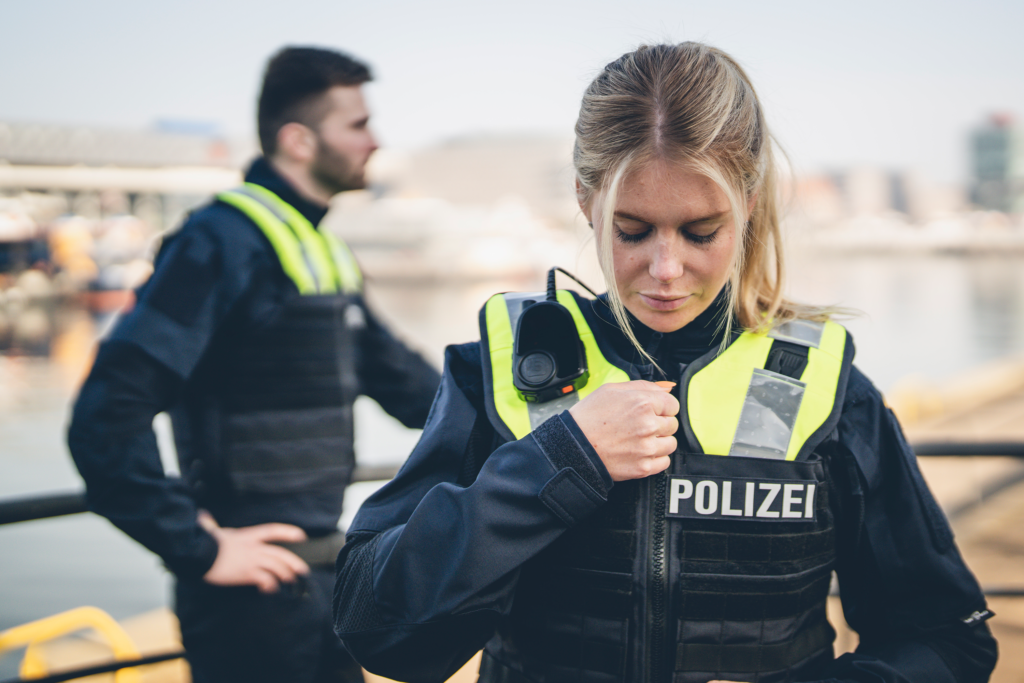
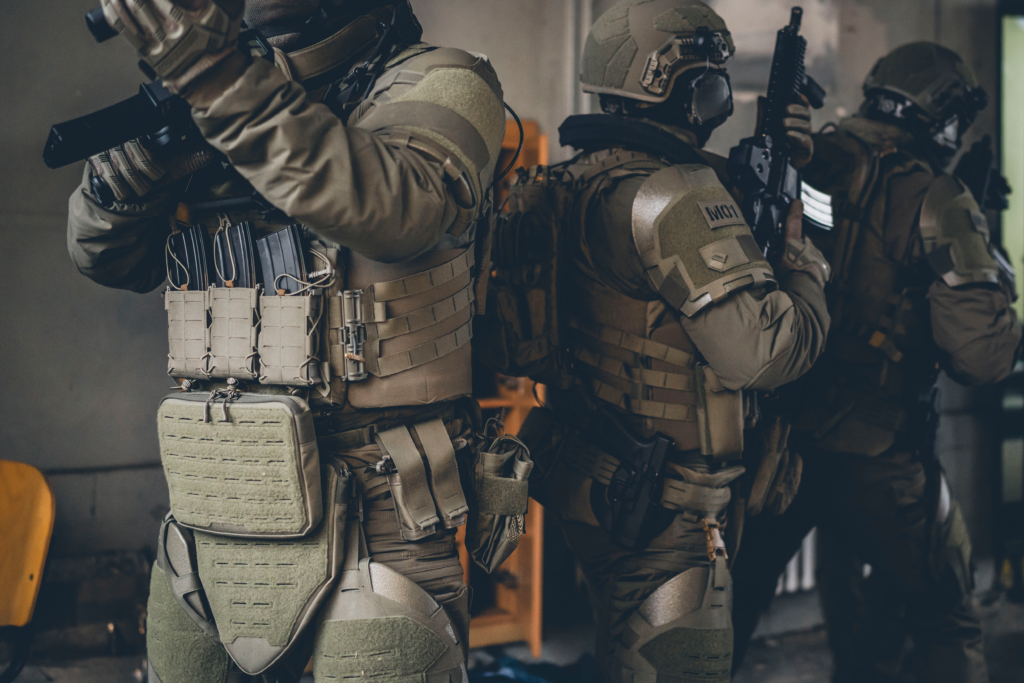
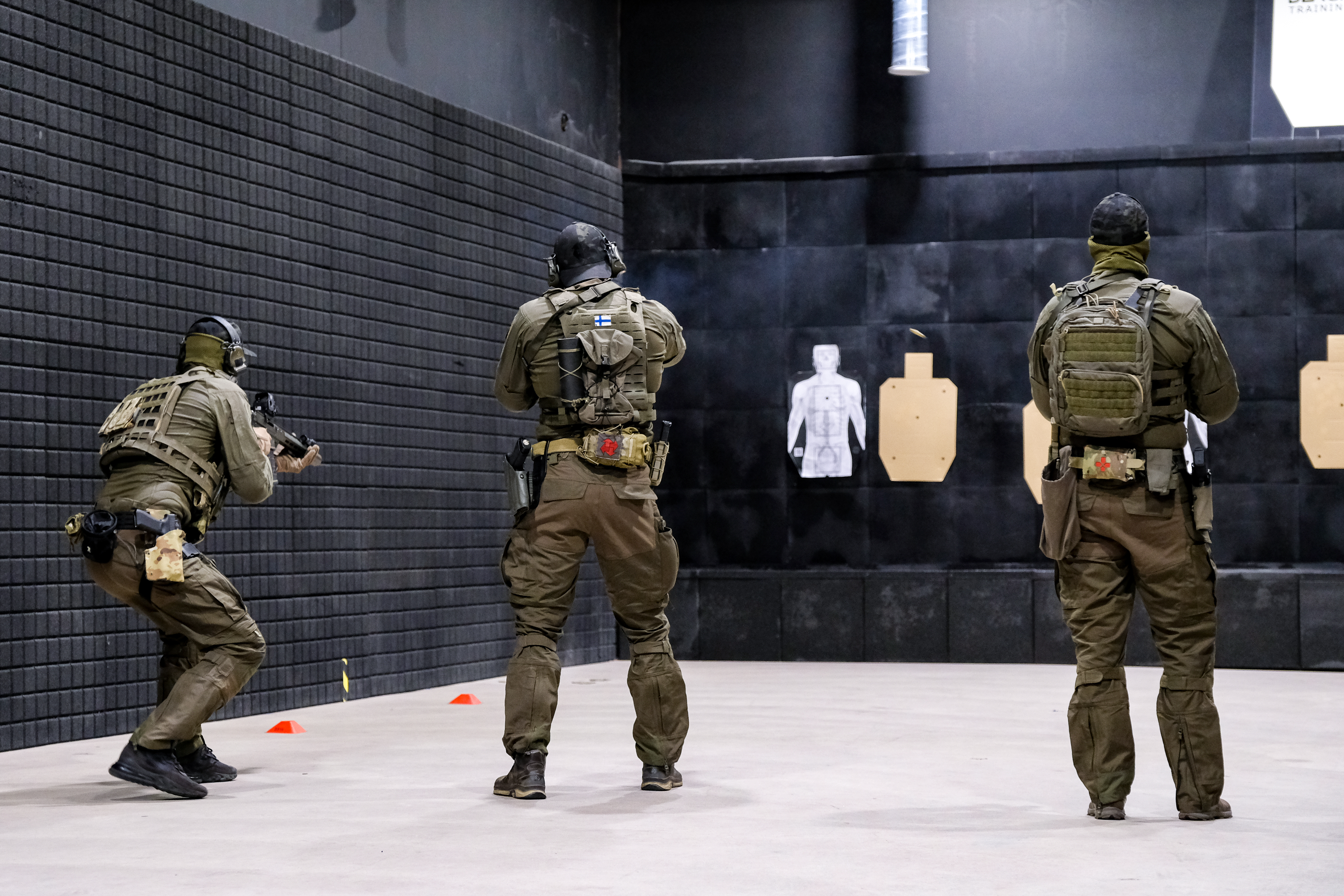
- Protective equipment: helmets, protective vests, ballistic and stab protection, shields and other protective equipment are worn as standard throughout training. This enables personnel to experience the impact of movement, ergonomics and physical load under realistic conditions.
- Weapons and operational equipment: from batons and firearms to non-lethal resources, personnel must be able to operate their equipment instinctively under realistic conditions, including weapon transitions and immediate action drills.
- Communication and command systems: radios, digital command-and-control systems, situational awareness tools and body-mounted cameras are integrated into training so that technical procedures and information flows mirror those encountered during operations.
- Training infrastructure: purpose-built training facilities, outdoor training areas, CQB facilities, firing ranges and simulation environments enable complex scenarios to be practised repeatedly while facilitating safe evaluation.
Only when equipment and resources are mastered in training can they develop their full protective capability and operational effectiveness when it matters most.
Organisation and leadership – creating the conditions for realistic training scenarios
‘Train as you fight’ requires a clear organisational commitment and consistent implementation at every level of leadership.
Organisational requirements:
- Clear training objectives: competency levels should be clearly defined, from basic and advanced training through to specialist qualifications, with appropriate scenarios and assessment criteria.
- Time and resources: sufficient training time, qualified instructors and access to suitable training infrastructure are essential.
- Interdisciplinary collaboration: tactical trainers, firearms instructors, operational psychologists, medical personnel and technical specialists must work together within a common training framework.
- Evaluation and further development: exercises should be systematically reviewed, with lessons documented and incorporated into the ongoing development of tactics, equipment and training.
In this way, ‘Train as you fight’ evolves from a guiding principle into an established organisational standard.
Summary
‘Train as you fight’ means aligning training as closely as possible with operational reality, using the same equipment and factoring in comparable stress factors, real decision-making dynamics and clearly defined responsibilities. For police and military personnel, this provides a basis for acting professionally in critical situations, protecting their own teams and safeguarding civilians.
Organisations that train realistically:
- minimise surprises during operations
- increase confidence in decision-making and execution
- strengthen team cohesion and mental resilience
- make the best possible use of available equipment and infrastructure
In short, ‘Train as you fight’ is more than a modern training philosophy – it is a cornerstone of operational readiness, now more than ever.
Images and graphics
Mehler Protection, Mehler Vario System GmbH (All rights reserved, 2026)
UF PRO, UNI&FORMA d.o.o. (All rights reserved, 2026)