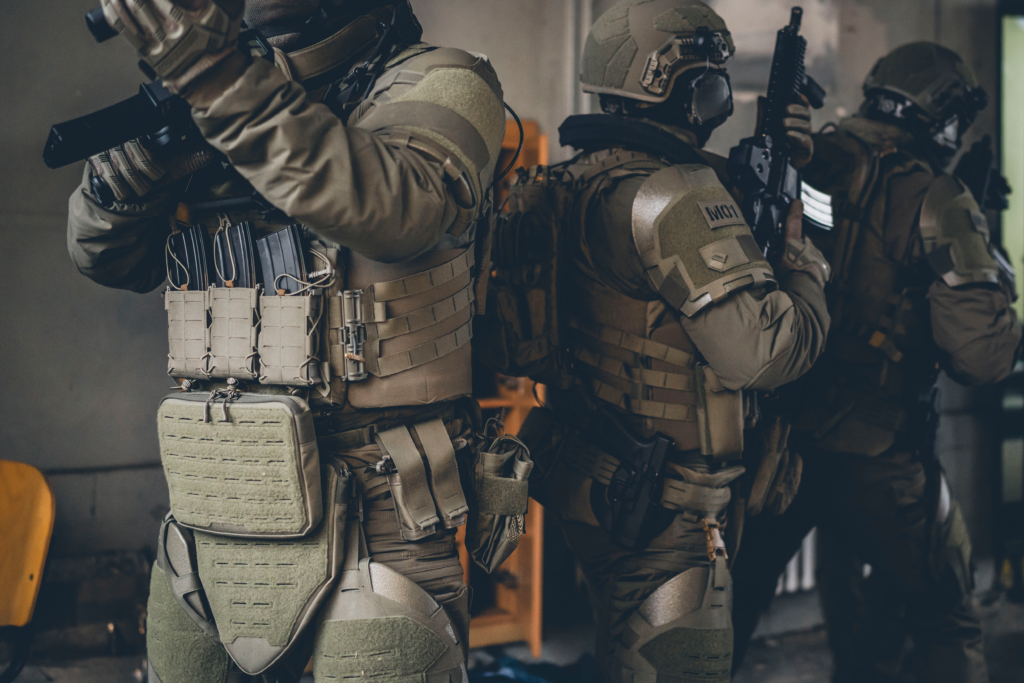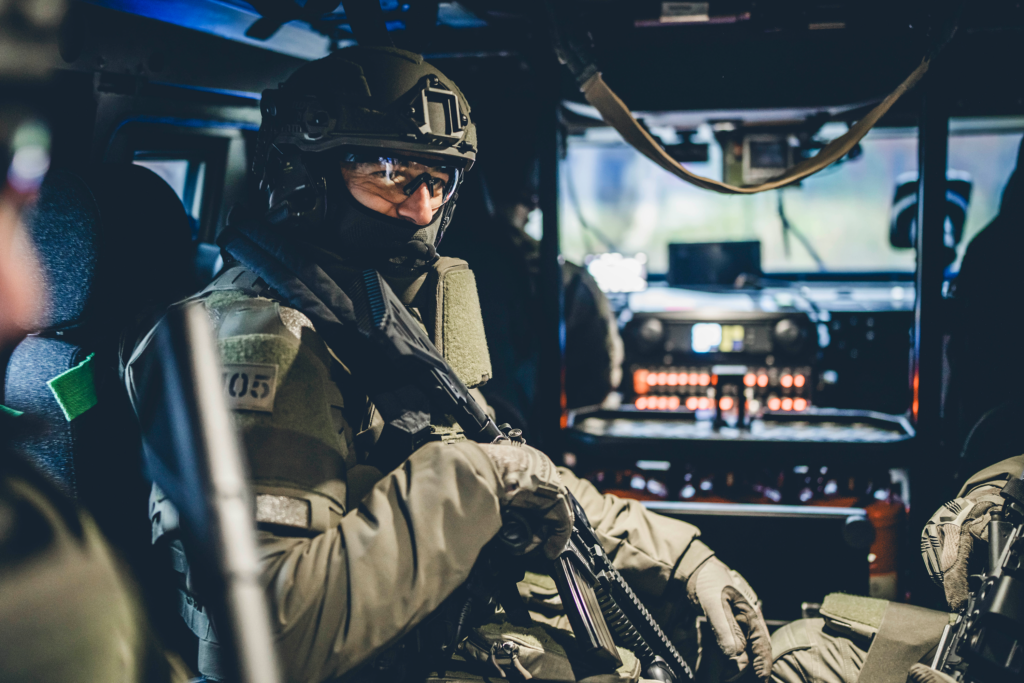
The rapid proliferation of unmanned aerial vehicles (UAVs) has fundamentally reshaped the military threat landscape in recent years. What began as a niche capability for intelligence, reconnaissance and target acquisition has evolved into a broad spectrum of highly effective weapons systems that influence virtually every domain of modern conflict. This new normal is especially evident in the maritime domain.
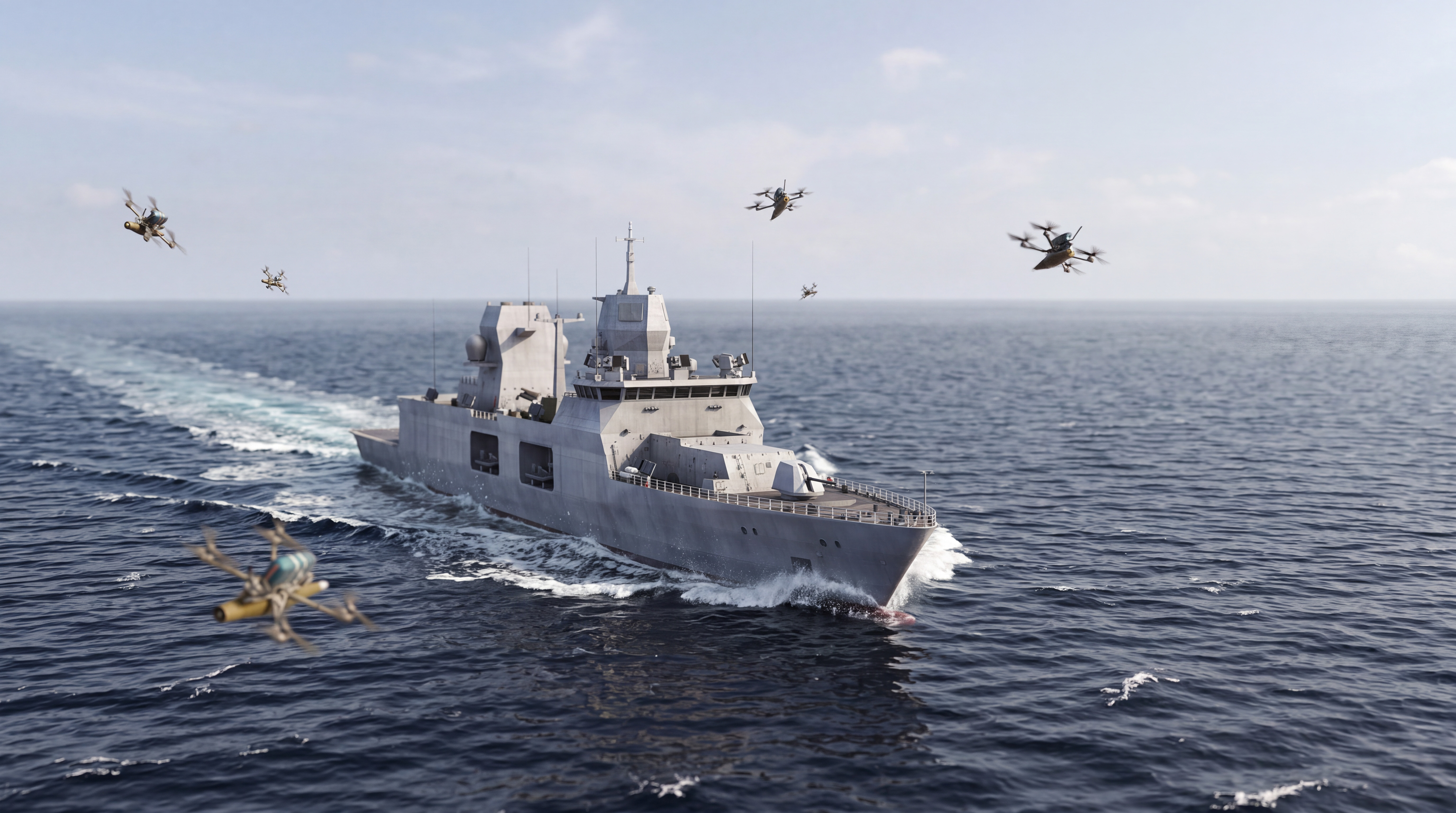
Naval forces and individual naval vessels now face a threat characterised by low cost, widespread availability, diverse payload options and exceptional tactical flexibility. Recent conflicts have demonstrated that even heavily armed warships can be vulnerable to small, low-cost drone systems deployed in large numbers.
The threat extends well beyond the traditional use of armed drones. Modern UAVs serve as intelligence, surveillance, target acquisition, and reconnaissance (ISTAR) platforms, electronic interference assets, communication relays and carriers of kinetic and non-kinetic payloads. In particular, their ability to operate in swarms and conduct complex attacks is increasingly challenging conventional concepts of maritime defence.
This blog post examines the overall threat posed to naval forces and individual vessels, analyses a range of operational scenarios and discusses possible countermeasures. Particular attention is given to situations in which conventional naval air defence systems can only be employed to a limited extent or not at all.
In this blog post
- The overall threat posed to naval forces and individual vessels
- UAV threats in the maritime environment
- Countering UAV threats
- Scenario-specific challenges
- The emerging capability gap in close-range maritime defence
- Enhancing platform survivability to prevent unit kills
- Conclusion: the need for specialised close-range defence systems and stronger platform resilience
The overall threat posed to naval forces and individual vessels
Drones are no longer just an auxiliary means of reconnaissance. They have evolved into autonomous weapons systems that can be deployed in modern conflicts of any intensity level. For naval forces, this has given rise to several new threat vectors. UAVs can be used for reconnaissance and target identification, perform fire control and target acquisition functions, conduct direct attacks, support electronic warfare or carry out deception and saturation attacks. In addition, they are increasingly capable of conducting coordinated swarm operations, delivering both operational and psychological effects.
The asymmetric cost structure poses a major problem. Where a modern warship represents an investment worth billions, many UAV systems are available for just a few thousand euros (or even far less). This creates a major economic imbalance between attacker and defender, thus increasingly challenging the traditional logic of military deterrence and defence.
The maritime environment presents additional hurdles. On the one hand, vessels generally benefit from favourable observation conditions and long lines of sight. On the other hand, they lack natural cover. Once detected, a ship will often remain visible to an enemy for long periods of time. Besides this, maritime platforms have only limited ways to reduce their signature or manoeuvre away from a threat. This leads to large surface combatants in particular becoming attractive targets for UAV-based attacks.
UAV threats in the maritime environment
Reconnaissance drones represent the lowest level of escalation. However, even these systems can have a significant operational impact by monitoring ship movements, identifying naval formations, collecting radar and communication signatures, locating weapon positions or marking targets for other weapon systems. Small, commercially available multicopter drones, too, can make a significant contribution to an adversary’s operations.
Loitering munitions represent a far greater threat. These combine the characteristics of a drone with those of a precision-guided weapon. They can loiter over a target area for extended periods, identify targets autonomously or semi-autonomously and attack from multiple directions. They are also ideally suited to saturation attacks against individual warships or entire naval forces.
UAV systems are likewise capable of carrying a wide variety of payloads. These include shaped charges, fragmentation warheads, armour-piercing munitions and improvised explosive devices (IEDs). Even comparatively small explosive charges can inflict critical damage on warships, including radar systems, communications equipment, antenna arrays, sensors, flight decks, weapon stations and bridge facilities.
Coordinated swarm attacks will present one of the greatest challenges in future conflicts. In such attacks, large numbers of UAVs strike simultaneously from multiple directions in an effort to overwhelm sensors, deplete missile inventories, saturate defensive systems and ultimately force breakthroughs. Defending against such attacks is already one of the most difficult tasks facing modern naval air defence units.
Countering UAV threats
Effective defence begins with the early detection of a threat. This calls for a range of sensor systems to be deployed, including modern 3D radar, specialised counter-UAV radars, electro-optical sensors, infrared sensors, passive signals intelligence systems and acoustic sensors. Multi-sensor data fusion is particularly crucial, given that small UAVs often exhibit very low radar and infrared signatures, making them difficult to detect using any single sensor.
Alongside sensor systems, electronic warfare is playing an ever more important role. Key measures here include GPS/GNSS jamming, spoofing techniques, disruption of data links and cyber attacks against hostile UAV systems. At the same time, however, modern drones are becoming increasingly autonomous, making them significantly more resistant to conventional electronic countermeasures.
Even so, kinetic engagement remains an indispensable component of any maritime defence strategy. Examples include surface-to-air missiles, rapid-fire guns, automatic cannons, remote weapons stations and heavy machine guns. Programmable ammunition in particular is opening up new possibilities for engaging small, highly manoeuvrable targets. While these systems can be highly effective in open-water operations, they face significant limitations in other deployment scenarios.
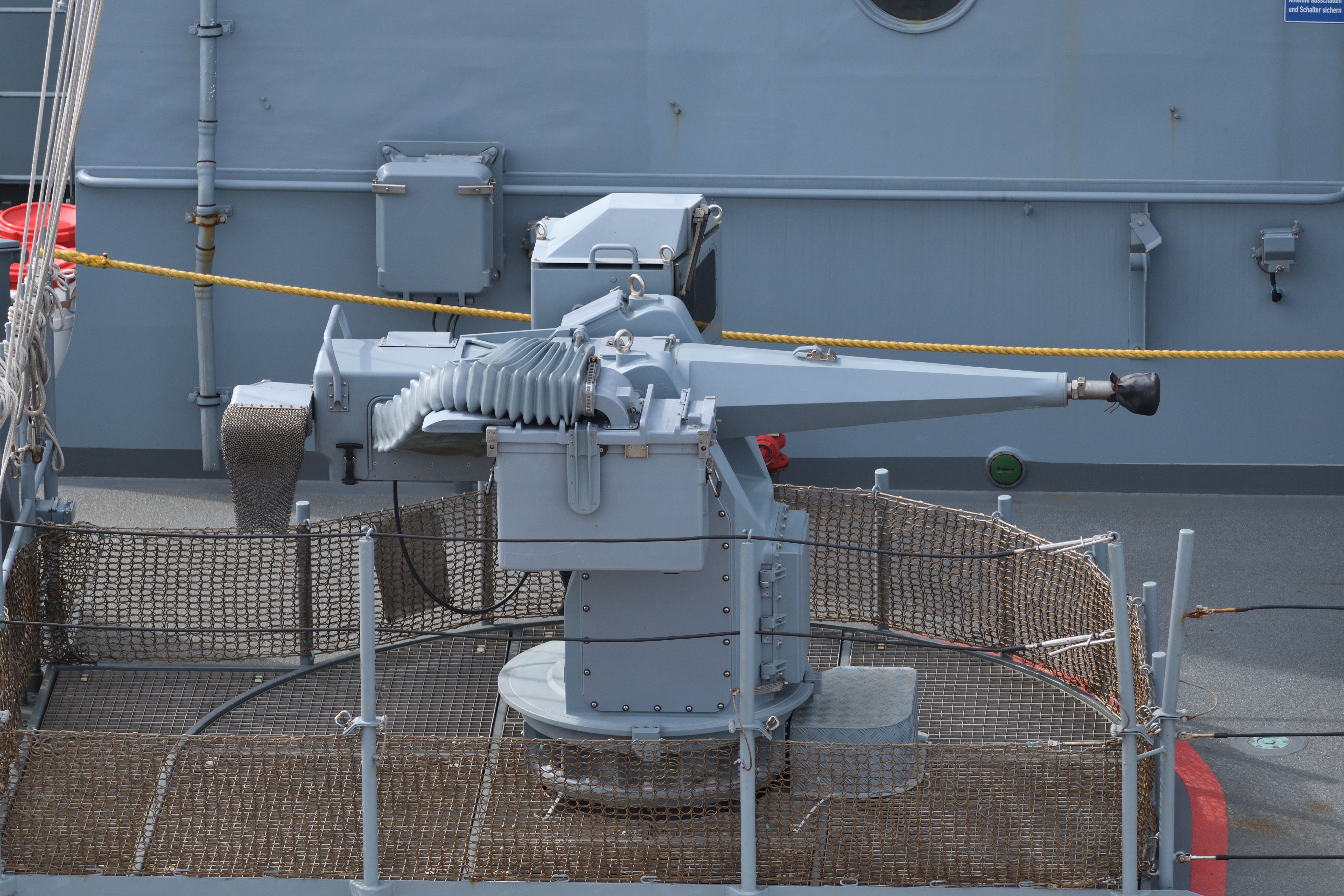
Future developments will therefore focus increasingly on directed-energy weapons. Key examples here include high-energy laser and high-power microwave (HPM) systems, which promise major advantages over conventional weapons in terms of response time, ammunition consumption and cost per engagement. Such systems could play a key role in countering swarm attacks in the future.
Ultimately, the attack and defence scenario will determine which counter-UAV systems and countermeasures are required.
Scenario-specific challenges
Scenario 1: UAV threats in open waters
For naval task groups, the most favourable conditions for countering UAV threats are generally found in open waters. Long detection ranges, unobstructed lines of sight and comparatively long reaction times allow threats to be detected and engaged at distances ranging from a few kilometres to several dozen. At the same time, the full complement of available defensive capabilities can be brought to bear.
This enables naval task groups to employ a layered defence concept that extends from long-range air defence through mid-range defence and close-range defence to the last line of defence immediately around the ship. In this scenario, existing air defence systems can operate at their full potential.
Even so, there are considerable challenges associated with open-water combat. Large-scale swarm attacks, small, low-signature drones, coordinated multi-vector attacks and combined offensive deployments involving both UAVs and conventional missiles can overwhelm even the most advanced defence systems. This is compounded by the inherent cost asymmetry between relatively inexpensive attack platforms and highly expensive interceptor systems.
Scenario 2: threats in narrow waterways
Traversing narrow waterways has traditionally been one of the most high-risk manoeuvres performed by naval forces. This applies to artificial canals, straits, narrow shipping channels and coastal transit routes. In such environments, vessels’ freedom of movement is severely restricted, evasive manoeuvres are limited and reaction times are drastically reduced.
At the same time, these waterways offer numerous potential launch sites for UAVs. Drones can be launched from close proximity and reach a ship within seconds. The complex surrounding civilian environment further complicates the identification of and defence against potential threats.
It is precisely these scenarios that expose the limitations of the response options currently available. The risk of collateral damage, the proximity of civilian infrastructure, dense shipping traffic and the difficulty of identifying targets often prevents heavy weapons from being deployed in any significant capacity. This creates a critical capability gap between conventional air defence and close-range asset protection.
Scenario 3: threats in port environments
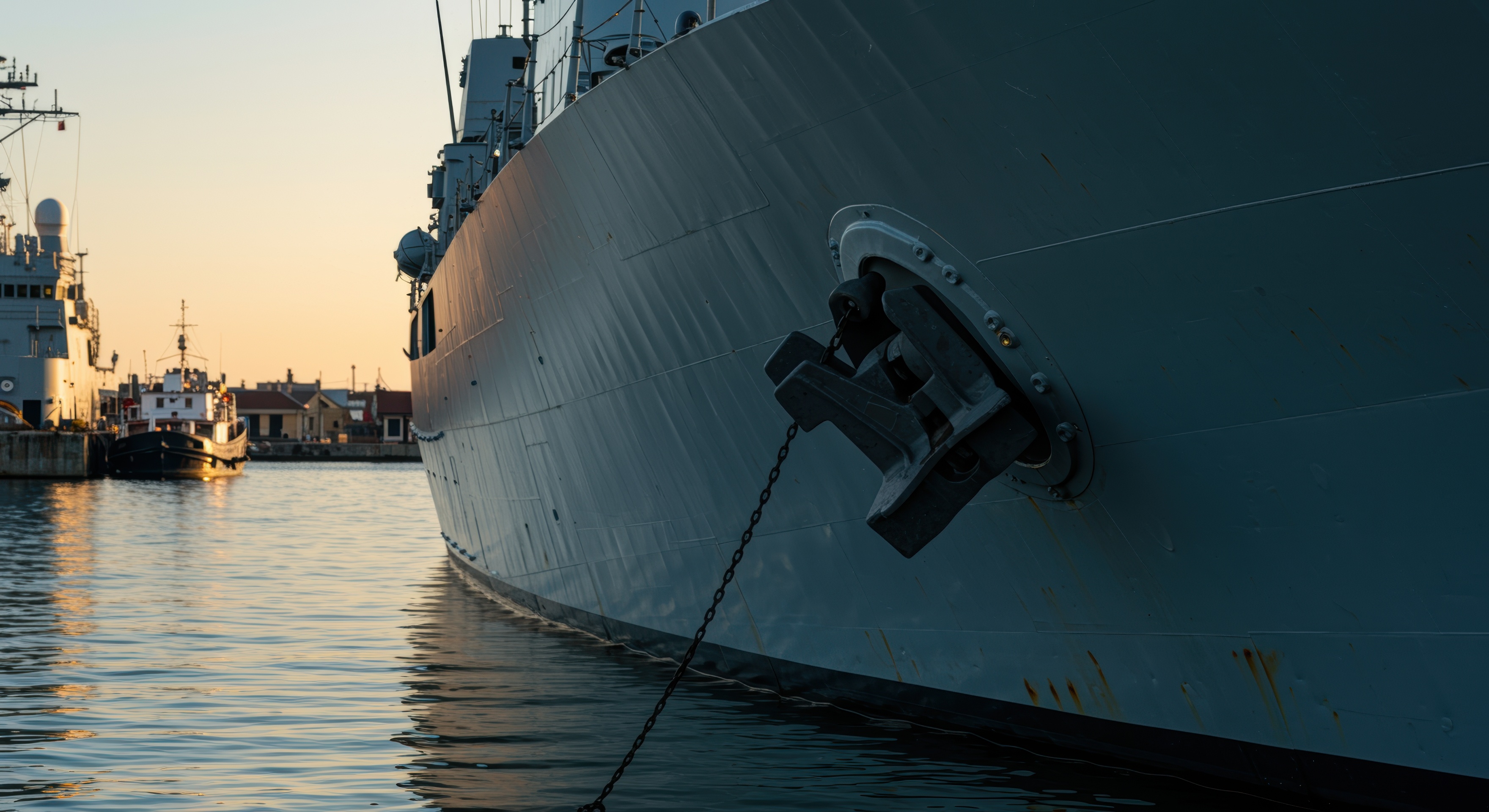
A warship is often at its most vulnerable while in port. It is stationary, its position is known and its mobility is limited or non-existent. Furthermore, civilian infrastructure, port facilities and often also civilian vessels are located in the ship’s immediate vicinity.
In such scenarios, small multicopter drones can operate from distances of just a few hundred meters (or, in some cases, even less than that). As a result, warning times are extremely short and opportunities to respond are severely limited.
A warship’s conventional defence systems are often only of limited use in a port environment. Safety regulations, the risk of collateral damage, the proximity of civilian infrastructure and the need to avoid friendly fire vastly curtail the use of automatic cannons, heavy machine guns or remotely operated weapons stations. This leads to a significant capability gap, particularly at close quarters, which cannot be adequately overcome by conventional naval air defence systems.
Scenario 4: landing craft and amphibious operations
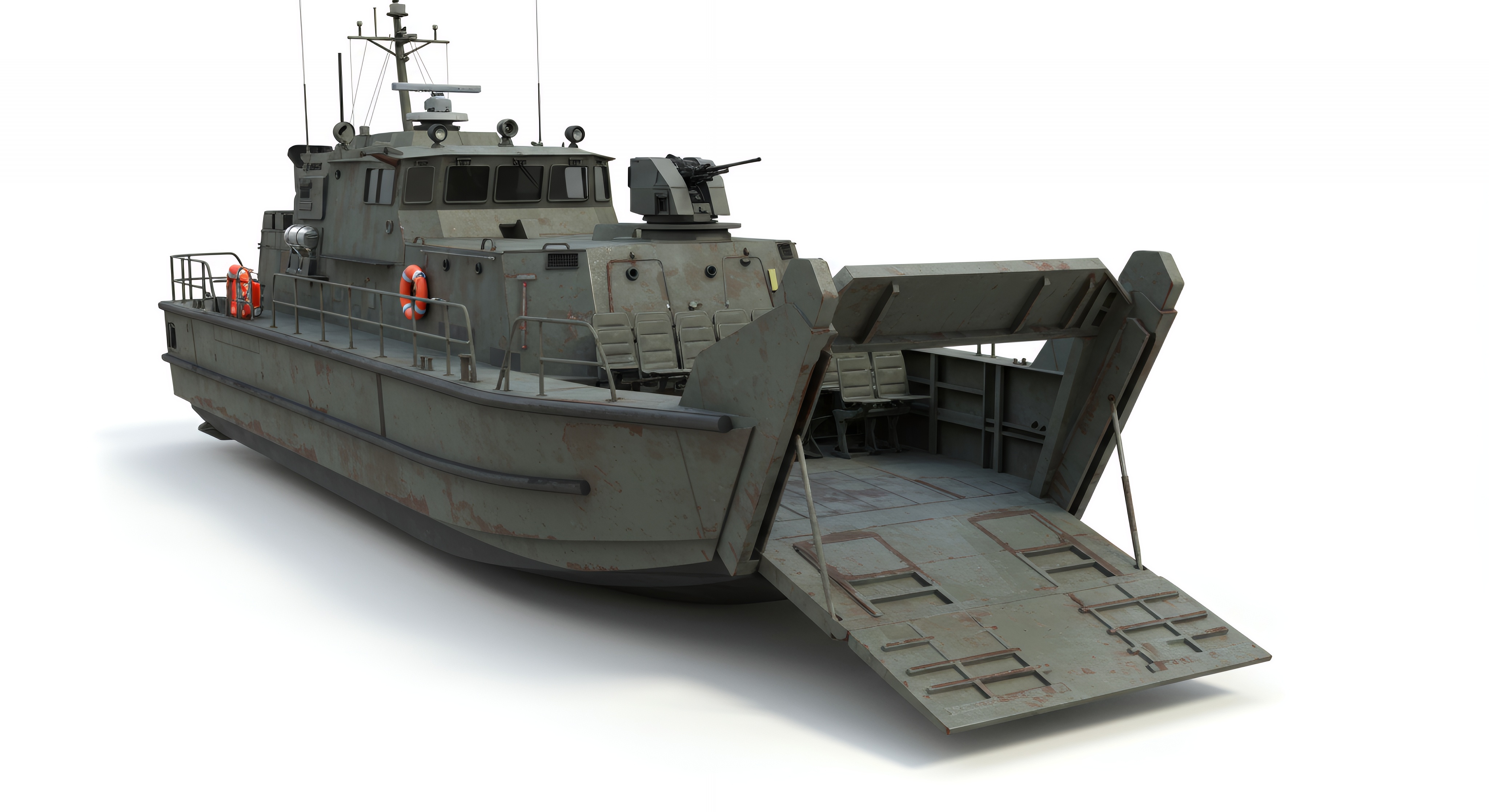
Landing craft and amphibious operations arguably present the most demanding operational scenario when it comes to UAV threats. During an amphibious landing, vessels move at low speed along predictable routes while operating in close proximity to potential launch sites.
In such situations, drones can be launched from buildings, concealed positions, vehicles or improvised launch sites. Consequently, warning times may be reduced to a matter of seconds. At the same time, the surrounding environment limits sensor range and effectiveness.
The resulting threat increasingly resembles the conditions typical of modern land-based warfare. These include late-detected threats, short-range attacks, top-attack scenarios and coordinated swarm attacks. The available response time is often no longer sufficient to be able to deploy conventional naval air defence systems effectively. As a result, traditional concepts of naval air defence are approaching their physical and tactical limits.
The emerging capability gap in close-range maritime defence
The various operational scenarios clearly demonstrate that, while modern naval forces do possess highly capable long-range air defence systems, they continue to face significant challenges when it comes to close-range and very close-range defence. This applies in particular to port environments, narrow waterways, amphibious operations, landing craft deployments and fixed maritime installations.
It is precisely in these situations that threats often emerge without warning – at very short range, from multiple directions at once and under significant constraints as to the available response options. Existing systems were not originally designed for these operational profiles, thus resulting in an operational capability gap.
Enhancing platform survivability to prevent unit kills
Alongside active defence measures against UAV threats, another consideration is gaining traction in the naval application: improving a platform’s ability to survive an enemy strike. While modern air defence and counter-UAV systems are designed to neutralise threats prior to impact, it must also be recognised that no defence system can guarantee complete protection. During swarm attacks, surprise close-range encounters or attacks that reduce response time to a minimum in particular, it must be assumed that some threats will manage to penetrate the defensive layers.
Against this backdrop, the focus now is on how to limit the impact of a successful strike on an affected naval unit. Historically, the vulnerability of critical areas aboard warships has often meant that even a single successful hit could render a platform combat-ineffective or destroy it entirely. Such ‘unit kills’, as they are known, are not necessarily caused by the direct destruction of the ship’s hull, but more often by the secondary effects that follow the initial impact.
Areas where large quantities of explosives or other high-energy materials are stored or handled are particularly critical in this regard. Key examples here include vertical launch systems (VLS), ammunition magazines, torpedo storage facilities, ammunition handling systems and other areas where explosives or pyrotechnic components are concentrated. A successful strike on any of these areas can trigger cascading effects that extend far beyond the direct effect of the enemy warhead and may ultimately result in the total loss of the platform.
Against the backdrop of the growing threat posed by low-cost, readily available UAV systems, it is becoming increasingly important to maximise the stability of maritime platforms. The objective is to design and isolate critical areas in such a way that even a successful strike will not necessarily lead to the loss of the platform’s combat capability or the ship itself. This can be achieved through measures such as greater physical separation of critical systems, additional protective structures, blast-resistant enclosures and design features that limit the effects of blastand fragmentation.
The underlying principle is ultimately to contain the effects of a strike and prevent the escalation of secondary damage. Rather than the total loss of the platform, a ship should be able to maintain essential functions, ensure damage control and, if necessary, withdraw from the operational area under its own power following a successful attack. In other words, a platform’s survivability is no longer determined solely by its ability to counter incoming threats, but increasingly also by how it absorbs damage and prevents its propagation.
This represents an important paradigm shift, particularly in the context of UAV threats. As attack platforms become even cheaper and the likelihood of individual defence penetration increases, improving a platform’s resilience can help to frustrate the attacker’s strategic objective: the neutralisation of a high-value naval asset. The combination of active defence, passive protection and a design approach that contains damage aboard ship by risk mitigating systems is therefore set to play a central role in the future development of maritime protection concepts.
Conclusion: the need for specialised close-range defence systems and stronger platform resilience
The growing proliferation of low-cost, high-performance UAV systems is fundamentally reshaping naval warfare. While conventional air defence systems remain indispensable, they are no longer sufficient to cover all threat scenarios on their own.
When it comes to port environments, narrow waterways, amphibious operations, landing craft deployments and fixed maritime installations in particular, an operational capability gap emerges between strategic air defence and close-range asset protection. Future maritime protection concepts will therefore require additional counter-UAV systems that are designed specifically for close-range defence.
These systems must be able to detect threats at extremely short range, automatically classify targets, respond within seconds and remain effective under complex operating conditions. They also need to be capable of protecting both fixed and mobile maritime platforms. Only the combination of conventional air defence, electronic warfare, advanced sensor systems and specialised close-range defence systems will enable naval forces, individual warships and amphibious forces to stage an effective defence against future UAV threats.
An equally important consideration is the survivability of maritime platforms following a successful strike. Even with advanced, layered close-range defensive capabilities in place, it must be assumed that individual UAVs or other threats will occasionally penetrate the defensive curtain. This is why it is becoming increasingly important to boost the resilience of maritime platforms. In particular, the structural separation and compartmentalisation of highly sensitive areas such as ammunition magazines, vertical launch equipment and torpedo systems can prevent a localised strike from escalating into a total loss of the platform. As a result, the focus of maritime protection concepts is no longer solely about preventing strikes, but also about mitigating their consequences. The ability to absorb damage, contain the effects of a strike and maintain at least partial combat capability is becoming a defining characteristic of modern naval forces as they address the growing UAV threat.
Mehler Protection offers a uniquely comprehensive range of solutions to protect naval platforms against UAV systems. In addition to conventional passive protection systems – including solutions designed to counter shaped-charge threats – Mehler Protection specialises in technologies that enhance platform resilience, thereby helping to prevent secondary damage when hostile projectiles manage to penetrate sensitive areas. With its innovative SCILT active close-range counter-UAV system, Mehler Protection closes the capability gap in close-range drone defence that arises in port operations, transit through narrow waterways and the like.
Images and graphics
Mehler Protection, Mehler Engineered Defence (All rights reserved, 2026)
zapper – stock.adobe.com